Building a Bulletproof Regulatory Intelligence Workflow: From Alert Chaos to Strategic Control
THIS BLOG WAS WRITTEN BY THE COMPLIANCE & RISKS MARKETING TEAM TO INFORM AND ENGAGE. HOWEVER, COMPLEX REGULATORY QUESTIONS REQUIRE SPECIALIST KNOWLEDGE. TO GET ACCURATE, EXPERT ANSWERS, PLEASE CLICK “ASK AN EXPERT.”
The alert arrives. That split-second pause where you’re calculating: Is this the regulation that triggers a complete product redesign? The one that grounds an entire shipment? The change that could lock us out of a critical market?
What unfolds next is predictable. You forward it to a distribution list – engineering, legal, maybe a product manager in another time zone. A flurry of replies follows. “Is this for our product line?” “Who’s handling this?” “I thought Sarah was tracking this.” The original alert gets lost in a sea of CCs, and accountability dissolves into guesswork.
Look, this ad-hoc, email-driven process is where immense corporate risk lives. It’s not a system; it’s a habit. And it’s a habit that’s costing companies millions in unseen ways – wasted time, delayed launches, and the ever-present danger of non-compliance.
This isn’t another article about the importance of monitoring regulations. You already know that. This is a practical guide for building an intentional, scalable, and defensible workflow to manage them. It’s about creating a system of governance that transforms regulatory intelligence from a reactive fire drill into a proactive, strategic advantage.
Table of Contents
- The Hidden Cost of a Broken Workflow: Why “Good Enough” Isn’t
- The Four Pillars of a Modern Regulatory Governance Framework
- Designing Your Workflow: Roles, Responsibilities, and Escalation Paths
- From Manual Chaos to Automated Clarity: The Technology Lynchpin
- AI Overview: Answering Your Core Questions
- FAQ: Overcoming Common Hurdles in Workflow Implementation
- The Final Step: From Process to Platform
The Hidden Cost of a Broken Workflow: Why “Good Enough” Isn’t
The biggest danger in compliance isn’t the regulation you know about; it’s the one that gets lost in the noise. When your “process” is a collection of spreadsheets and email chains, you’re operating on hope, not strategy. The costs aren’t always as obvious as a fine from a regulator. They’re hidden, and they bleed your organization dry.
Think about it this way. Research on project management software shows that 35% of small teams abandon a new tool within a year simply because it’s too complex and difficult to adopt. Your internal compliance process is no different. If it’s confusing, manual, and cumbersome, your team will find workarounds. They’ll create their own shadow spreadsheets or simply ignore a process that gets in their way. And that’s precisely where a critical update to a standard like IEC 62368-1 gets missed.
This isn’t just about inefficiency. It’s about a fundamental lack of visibility and accountability. When 75% of managers express frustration with their current tools’ ability to provide clear project status, it highlights a universal need. In compliance, this frustration is magnified. A project manager might miss a deadline; a compliance manager might miss a regulation that gates access to the entire EU market. The stakes are fundamentally higher.
The hidden costs manifest as:
- Last-Minute Fire Drills: Engineering teams are forced to drop everything to address a compliance issue that should have been identified six months earlier.
- Delayed Revenue: Products sit in warehouses, unable to ship, because a new labeling requirement was overlooked.
- Wasted R&D Cycles: Resources are spent designing products around outdated standards, leading to expensive and time-consuming redesigns.
- Eroded Trust: Nothing undermines executive confidence faster than a surprise compliance failure. It creates a perception of a department that isn’t in control.
A well-defined workflow isn’t about adding bureaucracy. It’s about eliminating the chaos that breeds these hidden costs.
The Four Pillars of a Modern Regulatory Governance Framework
To build a system that works, you need a blueprint. Forget the tangled web of emails and think in terms of four distinct, connected pillars. This framework provides the structure for turning raw information into verifiable compliance.
Pillar 1: Intelligence Gathering & Curation (The Signal)
Your workflow is only as good as the information feeding it. Relying on a handful of bookmarked government websites or sporadic newsletters is a recipe for disaster. The goal here is to get the best possible signal with the least amount of noise.
This means moving beyond passive monitoring to active curation. A modern approach involves a consolidated feed of relevant information from:
- Official Governmental Sources: Federal registers, parliamentary records, and agency websites.
- Standards Bodies: ISO, IEC, ANSI, and other critical organizations.
- Trade & Industry Groups: Often the first to analyze and report on upcoming changes.
- Expert Providers: Specialized services that do the monitoring for you, providing initial analysis and relevance tagging.
The key is to have a centralized intake process that filters and funnels alerts into one place, pre-sorted for relevance to your specific products and markets.
Pillar 2: Triage & Impact Analysis (The Assessment)
This is the most critical human touchpoint in the entire process. Once an alert comes in, you need a rapid and consistent way to answer three questions:
- Is this relevant to us? (Does it apply to our products, operations, or markets?)
- What is the potential impact? (Is it a minor labeling change or a fundamental product safety requirement?)
- How urgent is it? (When is the enforcement date? How long will it take to implement the change?)
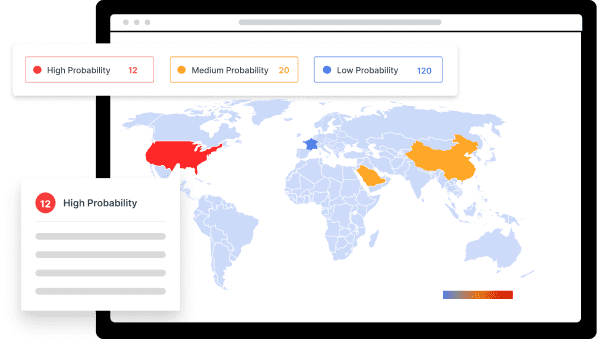
This triage shouldn’t be the job of one person. It requires a cross-functional team – often including representatives from legal, engineering, and product management – who can quickly assess an alert from multiple angles. They assign a priority level (e.g., High, Medium, Low) and route it to the correct owner. This step alone prevents countless hours of wasted effort by ensuring the right people are focused on the right problems.
Pillar 3: Action & Accountability (The Workflow)
With an alert assessed and prioritized, you need a clear, documented path to action. This is where you define who does what, by when. A successful workflow eliminates ambiguity by establishing:
- Clear Ownership: Every actionable alert is assigned to a single person (an “Owner”) who is responsible for seeing the resolution through.
- Defined Tasks: The required actions are broken down into concrete tasks (e.g., “Update product bill of materials,” “Revise user manual,” “Conduct new lab testing”).
- Automated Notifications: The system automatically notifies team members when a task is assigned to them, when a deadline is approaching, or when a preceding task is complete.
- Transparent Status: Everyone involved can see the real-time status of the response, from initial assessment to final implementation.
This is about creating a chain of accountability that is both transparent and easy to follow.
Pillar 4: Evidence & Audit Trail (The Record)
You aren’t truly compliant until you can prove you are. The final pillar of governance is a centralized, unchangeable record of your entire process. For every single regulatory alert, you should be able to instantly show:
- When you became aware of the change.
- How you assessed its impact.
- What actions you took in response.
- Who was responsible for those actions.
- The final evidence of compliance (e.g., test reports, updated documents, certificates of conformity).
This isn’t just for external auditors. This audit trail is your internal safety net. When a question arises six months or two years down the line, you have a definitive record of the due diligence you performed. It’s your best defense and a powerful demonstration of a mature compliance program.
Designing Your Workflow: Roles, Responsibilities, and Escalation Paths
A framework is great, but a workflow comes to life with people. Defining clear roles is essential to making the process smooth and efficient. While titles may vary, the functions are universal.
- The Scout: This person or team is on the front lines, responsible for the initial monitoring and filtering of information. In many organizations, this function is outsourced to a service like Compliance & Risks to ensure comprehensive coverage without the massive internal overhead.
- The Assessor: This is typically a cross-functional group or a lead compliance manager. They perform the triage (Pillar 2), determining the relevance, impact, and urgency of an alert flagged by the Scout.
- The Owner: This is the Subject Matter Expert (SME). If it’s a substance regulation, it might be a materials engineer. If it’s a labeling rule, a packaging specialist. The Owner is responsible for executing the tasks required for compliance.
- The Stakeholder: These are individuals who need to be kept informed but aren’t directly responsible for action. Think of a country manager who needs to know about a new regulation in their market or an executive who wants visibility into high-risk issues.
The Triage Process in Action
- Alert Received: A Scout (or an automated system) flags a new draft regulation on plastics recycling in Germany.
- Initial Triage: The Assessor immediately confirms it’s relevant because you sell products in Germany with plastic packaging. They classify it as High Impact (affects all German shipments) and Medium Urgency (12-month implementation window).
- Assignment: The alert is assigned to the Owner, who is the Lead Packaging Engineer. The system automatically creates a task for them: “Develop a plan to comply with new German plastics regulation.”
- Stakeholder Notification: The German Country Manager and the Head of European Operations are automatically added as Stakeholders, so they receive updates without being involved in the day-to-day tasks.
Don’t Forget Escalation Paths
What happens when the Assessor flags an alert as High Impact and High Urgency? For example, an immediate product recall notice. Your workflow must have a pre-defined escalation path. This ensures that critical information bypasses the normal process and gets in front of executive leadership immediately. It could be an automated P1 alert to the VP of Engineering and the General Counsel, ensuring there’s no delay in making crucial, time-sensitive decisions. Without this, you risk catastrophic delays.
From Manual Chaos to Automated Clarity: The Technology Lynchpin
You can design the most elegant workflow on paper, but if it runs on spreadsheets and email, it will eventually fail under pressure. The volume and velocity of global regulatory change are simply too great for manual systems to handle.
This is where technology becomes the lynchpin of your governance framework. A dedicated regulatory intelligence platform isn’t a luxury; it’s the engine that makes your workflow possible. It seamlessly connects the four pillars:
- Centralized Intelligence: Instead of Scouts hunting across dozens of websites, the platform provides a curated, tailored feed of alerts (Pillar 1).
- Collaborative Triage: It provides a common space for Assessors to review, comment on, and prioritize alerts, creating a permanent record of their analysis (Pillar 2).
- Automated Workflows: Once an alert is approved, the system automatically assigns tasks to Owners, sends reminders, and tracks progress, ensuring nothing falls through the cracks (Pillar 3).
- An Instant Audit Trail: Every click, comment, and document upload is logged automatically, building a detailed, defensible record of your due diligence without any extra effort (Pillar 4).
The right platform provides a “single source of truth,” giving everyone from the engineer on the ground to the C-suite a clear, real-time view of the organization’s compliance posture. It replaces ambiguity with clarity and manual effort with intelligent automation.
AI Overview: Answering Your Core Questions
What is a regulatory intelligence workflow?
A regulatory intelligence workflow is a structured, repeatable business process for identifying, assessing, acting on, and documenting responses to regulatory changes. It moves a company from a reactive, ad-hoc approach to a proactive, systematic one.
Why is regulatory governance important?
Regulatory governance establishes clear accountability, mitigates the risk of non-compliance, and creates a defensible, auditable trail of due diligence. It ensures a consistent approach to managing regulatory obligations across the entire enterprise, protecting revenue and brand reputation.
What are the key roles in a compliance workflow?
The key functional roles are typically Scouts (who monitor for changes), Assessors (who analyze impact), Owners (who implement required actions), and Stakeholders (who are kept informed).
FAQ: Overcoming Common Hurdles in Workflow Implementation
- “We’re too small for a formal process. It seems like overkill.”
Actually, a defined process is even more critical for a small team where people wear multiple hats. A simple, clear workflow ensures that compliance tasks, which may not be anyone’s full-time job, don’t get forgotten or dropped during a busy product launch. It’s about creating clarity, not complexity. - “Our teams will just see this as more bureaucracy.”
This is a framing issue. A good workflow reduces bureaucracy. It eliminates endless email chains, pointless meetings, and the frustrating hunt for the right person to answer a question. By providing a clear, automated path, it frees your experts to focus on solving problems, not chasing information. Position it as a tool for empowerment, not enforcement. - “We don’t have the budget for a sophisticated platform.”
Consider the alternative. What is the cost of a single missed regulation? The cost of a product redesign, a blocked shipment, or losing access to a key market can easily run into the hundreds of thousands, if not millions, of dollars. The investment in a streamlined process and the right technology is a fraction of the cost of a single significant failure. - “How do we get buy-in from other departments like Engineering or Legal?”
Focus on what matters to them. For Engineering: “This process will give you a six-month head start on new design requirements, eliminating last-minute fire drills and redesigns.” For Legal: “This system provides a time-stamped, unchangeable audit trail of our due diligence on every regulation, dramatically reducing our risk profile.” For Sales & Operations: “This ensures we never face a delayed shipment or lose market access because of a compliance oversight.”
The Final Step: From Process to Platform
Building a robust regulatory intelligence workflow isn’t just an operational upgrade; it’s a strategic imperative. It’s the foundation for entering new markets with confidence, launching products on time, and protecting your brand from the ever-present risk of non-compliance.
The days of managing this complexity with spreadsheets and email are over. The framework outlined here provides the blueprint, but a purpose-built platform provides the engine.
Ready to move beyond the spreadsheet? See how the C2P platform can become the operational core of your regulatory intelligence workflow.
Experience the Future of ESG Compliance
The Compliance & Risks Sustainability Platform is available now with a 30-day free trial. Experience firsthand how AI-driven, human-verified intelligence transforms regulatory complexity into strategic clarity.
👉 Start your free trial today and see how your team can lead the future of ESG compliance.
The future of compliance is predictive, verifiable, and strategic. The only question is: Will you be leading it, or catching up to it?
Six Months of Research, Done in 60 Seconds
Cut through ESG chaos and act with clarity. Try C&R Sustainability Free.