Proactive vs. Reactive Compliance: Why the Difference Determines Your Risk Exposure
THIS BLOG WAS WRITTEN BY THE COMPLIANCE & RISKS MARKETING TEAM TO INFORM AND ENGAGE. HOWEVER, COMPLEX REGULATORY QUESTIONS REQUIRE SPECIALIST KNOWLEDGE. TO GET ACCURATE, EXPERT ANSWERS, PLEASE CLICK “ASK AN EXPERT.”
The difference between proactive and reactive compliance is the difference between managing regulatory risk and being managed by it. Proactive compliance teams monitor regulatory change before it affects their products, adapt before deadlines arrive, and build a continuous evidence trail that makes audits routine. Reactive compliance teams discover gaps during audits, scramble to meet deadlines they did not see coming, and absorb costs in fines, product delays, and internal fire drills that could have been avoided months earlier. Regulatory compliance automation is what makes the proactive model operationally viable for any team working across multiple markets and product categories.
Quick Answer:
Proactive compliance uses continuous monitoring, regulatory intelligence tools, and regulatory compliance automation to stay ahead of regulatory change. Reactive compliance responds to requirements after they become enforcement risks. For global enterprises managing product compliance across multiple markets, the reactive model consistently produces higher costs, greater exposure, and slower product cycles than organizations that have built proactive compliance programs.
Table of Contents
- What Is the Difference Between Proactive and Reactive Compliance?
- Why Reactive Compliance Is a Business Liability
- What Does Proactive Compliance Actually Look Like?
- How Does Regulatory Compliance Automation Enable Proactive Management?
- The Business Case: What You Gain by Shifting Approaches
- What Stands in the Way of Going Proactive?
- Frequently Asked Questions
What Is the Difference Between Proactive and Reactive Compliance?
These two approaches share the same destination – meeting regulatory requirements – but take fundamentally different paths to get there.
Reactive compliance is built around response. The team tracks what regulators are currently enforcing, addresses gaps when they surface during an audit or product review, and updates processes after a regulatory event makes the need undeniable. It works when regulatory change is slow and highly predictable. In most global product markets today, it does not.
Proactive compliance is built around anticipation. The team monitors proposed and enacted regulations before they take effect, assesses the impact on products before those changes become mandatory, and builds evidence of compliance as a continuous process rather than a pre-audit sprint. Regulatory compliance automation is what makes this model operationally viable – without it, the volume of regulatory change across global markets makes continuous monitoring impossible to sustain at any realistic team size.
The distinction matters because the cost of each model compounds in opposite directions. Proactive compliance gets more efficient over time as processes mature and data accumulates. Reactive compliance gets more expensive as regulatory volume increases, markets multiply, and the gap between what compliance teams can monitor manually and what regulators actually require continues to widen.
It is worth being direct about what reactive compliance costs in practical terms. When a regulation takes effect and your team discovers it during an audit rather than through ongoing monitoring, you are not just behind on that one requirement. You are behind on every requirement that your monitoring gap allowed to slip through. For product companies operating across the EU, US, APAC, and emerging markets simultaneously, that gap can be substantial.
Why Reactive Compliance Is a Business Liability
Most organizations do not choose the reactive model. They inherit it. It begins with spreadsheets and shared drives that were adequate when the product line was smaller, the regulatory scope was narrower, and the team’s time was sufficient to keep up. Over time, the scope expands, the team doesn’t, and what worked becomes a liability.
The business exposure shows up in three distinct areas.
- Market access delays. Product launches stall when compliance gaps surface late in development cycles. A regulation that could have been addressed in the design phase becomes an expensive engineering change or a delayed market entry. For global manufacturers releasing products across multiple jurisdictions simultaneously, these delays compound. A single missed regulatory requirement in one market can hold an entire product family.
- Regulatory penalties. The global trend in product compliance enforcement is toward higher fines, more active inspection regimes, and expanded product categories under regulatory oversight. Organizations that discover compliance gaps through enforcement actions – rather than their own monitoring – face not just fines but market withdrawal risks, recall costs, and reputational damage that outlasts any single enforcement event. The EU’s GPSR, REACH updates, and expanding product safety directives all operate in enforcement environments where regulators are increasingly active.
- Internal resource burn. Reactive compliance teams spend a disproportionate share of their time in documentation sprints, retroactive evidence collection, and audit preparation. That time is not available for work that reduces future risk. The operational cost of repeatedly operating in crisis mode is real, even when it doesn’t appear as a line item on the compliance budget.
There is also a strategic cost that is harder to quantify. Compliance teams that operate reactively have less organizational credibility when they need to influence product development or procurement decisions upstream. The business sees compliance as a cost center rather than a risk management function. In reactive mode, that perception is not wrong.
What Does Proactive Compliance Actually Look Like?
Proactive compliance has four operational characteristics that distinguish it from reactive approaches.
- Regulatory monitoring is continuous, not periodic. Rather than tracking what has changed since the last review, a proactive team receives real-time alerts on proposed and enacted regulations across the markets their products touch. When a new directive enters consultation phase, the compliance team is informed. When it progresses to enactment, the team has the effective date, scope, and applicable product categories already mapped.
- Impact assessment happens early. When a new regulation enters the monitoring system, the immediate question is whether it affects any current or planned products. A proactive team can answer that question before the regulation takes effect, giving product engineers time to adjust rather than react. This is where regulatory compliance automation earns its value – matching incoming regulatory data against existing product portfolios at a speed and consistency that manual review cannot replicate.
- Evidence is built continuously. Audit preparation is not a distinct activity for a proactive compliance team. Evidence of compliance – test results, certifications, supplier declarations, engineering records – is collected and maintained as products evolve. When an audit occurs, the team presents a living record rather than reconstructing history under pressure. This kind of evidence management built into the compliance workflow removes the scramble that makes audits expensive and operationally disruptive.
- Compliance is embedded in product development. Rather than functioning as a gate at the end of development, compliance requirements inform design from the start. Proactive teams work with product engineers during specification phases, flagging known regulatory requirements and anticipated changes before they become technical constraints. The result is fewer engineering surprises and faster time to market across all target jurisdictions.
How Does Regulatory Compliance Automation Enable Proactive Management?
Regulatory compliance automation is the infrastructure that makes proactive compliance scalable. Without it, a global compliance team cannot realistically monitor regulatory activity across 195 countries, map those changes to product portfolios, maintain current evidence records, and still have capacity for the strategic work their business requires.
What automation does, specifically:
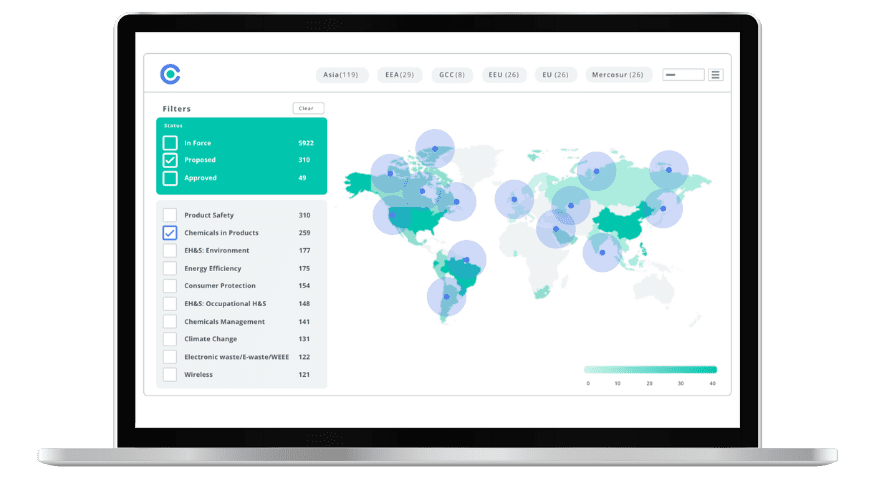
- Aggregates regulatory change at scale. Monitoring regulatory sources manually across multiple jurisdictions is a full-time job that compounds with every new market. Automated regulatory intelligence platforms ingest updates from government sources, standards bodies, and regulatory agencies continuously, filtering for relevance to the product categories and geographies that matter to the organization.
- Maps regulations to products automatically. When a new regulation enters the system, automated platforms assess which product lines it affects based on product classifications, market distribution, and regulatory scope. This replaces the manual process of reading a regulation and working backwards through product data – and it does it faster, with greater consistency, and without the gaps that manual review inevitably creates.
- Maintains an audit-ready evidence record. Automated evidence management links compliance documentation to specific products, regulations, and time periods. When requirements change, the system flags what documentation needs updating. When an audit request comes in, the compliance team pulls a current evidence package rather than rebuilding it from scratch.
- Surfaces early warnings on regulatory trends. Beyond tracking enacted regulations, advanced regulatory intelligence platforms monitor proposed regulations and regulatory guidance in consultation phases, giving compliance teams visibility into what may be required 12 to 24 months ahead. This is the earliest point at which the proactive model creates strategic value – informing R&D investment, supplier selection, and market prioritization based on where regulatory requirements are heading, not just where they currently are.
If your compliance team is not operating with these capabilities, the gap between what your team can track and what regulators require is almost certainly wider than anyone in your organization has fully quantified. Reviewing the full range of C2P use cases illustrates where these operational gaps tend to appear and how they get addressed.
The Business Case: What You Gain by Shifting Approaches
The argument for proactive compliance is not that it eliminates risk. The argument is that it reduces the cost, severity, and frequency of compliance-related business disruptions over time – while building organizational capacity that reactive compliance erodes.
- Faster product launches. When compliance requirements are addressed during design, products move through final validation faster. Engineering changes made in the specification phase cost a fraction of what the same changes cost post-development. For product companies where speed to market is a competitive factor, this difference has measurable revenue implications.
- Audit efficiency. Organizations with continuous evidence management report significantly shorter audit timelines. The documentation exists, it is current, and it maps clearly to the requirements being assessed. The difference between a well-documented compliance program and a reconstructed one shows up in auditor time, internal resource time, and the probability of findings that require remediation.
- Reduced regulatory penalty exposure. Early identification of compliance gaps means gaps get addressed before enforcement actions. The financial risk of operating in markets without verified compliance is eliminated before it can materialize, rather than managed after the fact.
- Organizational alignment. When compliance operates proactively, it functions as a business intelligence function, informing market strategy, product development, and procurement decisions, rather than a verification step that product teams work around. This is where compliance adds competitive value rather than just operational necessity.
Staying current on regulatory developments across global product markets is itself an ongoing challenge. The Pulse newsletter covers the regulatory changes that matter most for product compliance teams who need to track what is moving in their relevant markets.
What Stands in the Way of Going Proactive?
Organizations that remain in reactive mode typically identify the same obstacles: team size, budget constraints, and the immediate pressure of current compliance obligations that leaves no bandwidth to build better systems.
These are genuine constraints. They are also the reason the proactive model requires automation rather than additional headcount. Adding compliance analysts to a reactive workflow does not change the workflow. It adds capacity to a model that will still fall behind under the weight of global regulatory change. Regulatory compliance automation addresses the structural limitation rather than just the resource limitation.
The pressure of existing obligations is real. A team that spends most of its capacity on audit preparation and gap remediation has limited time to build new monitoring processes. The practical path forward for most organizations is to start with the highest-risk markets and product categories – the areas where a compliance gap would have the most severe consequences – and build proactive processes there first, then expand scope as the system matures.
The transition from reactive to proactive is not immediate. It requires building regulatory intelligence infrastructure, establishing ongoing monitoring processes, and integrating compliance activity into product development workflows. That investment pays back in audit costs, product launch cycles, and the competitive positioning of organizations that can confidently certify product compliance across global markets rather than hoping their gaps don’t surface during an inspection.
Frequently Asked Questions
What is regulatory compliance automation?
Regulatory compliance automation is the use of software to monitor regulatory change, map requirements to products or processes, and maintain compliance evidence on an ongoing basis. Rather than requiring compliance teams to manually track regulatory updates across multiple jurisdictions, automated platforms aggregate and filter regulatory data in real time, reducing both the manual effort involved and the risk of missing critical regulatory changes.
What is the real difference between proactive and reactive compliance?
Proactive compliance addresses regulatory requirements before they become enforcement risks, using continuous monitoring and early-warning systems to stay ahead of regulatory change. Reactive compliance responds to requirements after they are in effect, typically discovering gaps through audits, product reviews, or enforcement actions. Proactive compliance generally produces lower long-term costs, faster audit cycles, and fewer market access delays, while reactive compliance carries compounding operational risk as regulatory scope grows.
Can a small compliance team operate proactively?
Team size is the primary argument for regulatory compliance automation. A small team equipped with automated regulatory monitoring, impact assessment, and evidence management can maintain a proactive compliance posture across a much larger regulatory scope than the same team operating manually. The technology compensates for the headcount constraint. The alternative is accepting a monitoring gap that grows with every new market or product category the organization enters.
How does compliance automation reduce regulatory risk?
Automation reduces risk by ensuring regulatory changes are identified and assessed before their effective dates, that compliance evidence is current rather than reconstructed before an audit, and that product teams have early visibility into upcoming requirements. Each of these capabilities moves compliance activity earlier in the business process, where the cost of addressing gaps is substantially lower than at the point of enforcement.
What should compliance teams monitor to stay ahead of regulatory change?
At minimum: proposed and enacted regulations in every market where products are sold or manufactured; updates to relevant product standards including ISO, IEC, and EN families; enforcement guidance and communications from regulatory agencies; and consultation periods for regulations that are not yet in effect. For most global product companies, the volume of relevant regulatory activity across even a focused geographic and product scope exceeds what any team can monitor manually without automated support.
Simplify Corporate Sustainability Compliance
Six months of research, done in 60 seconds. Cut through ESG chaos and act with clarity. Try C&R Sustainability Free.