
June 18th, 2025
WATCH ON-DEMAND
This blog was originally posted on 6th May, 2026. Further regulatory developments may have occurred after publication. To keep up-to-date with the latest compliance news, sign up to our newsletter.
AUTHORED BY CATHERINE BURKE, SENIOR QUALITY ASSURANCE LEAD; AND ANDREW O’NEILL, REGULATORY SPECIALIST; COMPLIANCE & RISKS
Toy recall data shows that the most common toy hazards are often foreseeable and preventable. The article argues that companies should use toy safety regulations earlier in product design and risk mitigation, rather than treating them only as final market access checks.
Toy recall data continues to show a pattern that compliance teams already know well, but businesses still underestimate in practice: the biggest hazards are rarely unusual or unpredictable. They are usually choking hazards, hazardous chemicals, accessible magnets, accessible button batteries, flammability issues, electrical risks, entrapment, suffocation, strangulation, burns or mechanical failures that should have been identified before the product reached a child.
In the recall dataset reviewed for this article, covering roughly the first three and a half months of 2026, choking was by far the leading issue, followed by chemical hazards, magnet ingestion, toxicity, fire, entrapment, suffocation, electrical hazards, strangulation and burns. These are not isolated or random failures. They are the same hazards that toy safety legislation, standards and guidance already try to prevent through age grading, design controls, material restrictions, abuse testing, warning requirements, technical documentation and post-market monitoring. The current Toy document already frames this point clearly by linking the leading recall hazards to failures in design, supplier controls, material selection and foreseeable misuse assessment.
That is why toy recalls should not be viewed only as a post-market enforcement issue. They should be read as a live map of preventable failure. Where the same hazards appear repeatedly across recall notices, the lesson is not simply that companies need faster recall systems. The deeper lesson is that regulations need to be used earlier, as design and risk mitigation tools, not just as market access checks at the end of development.
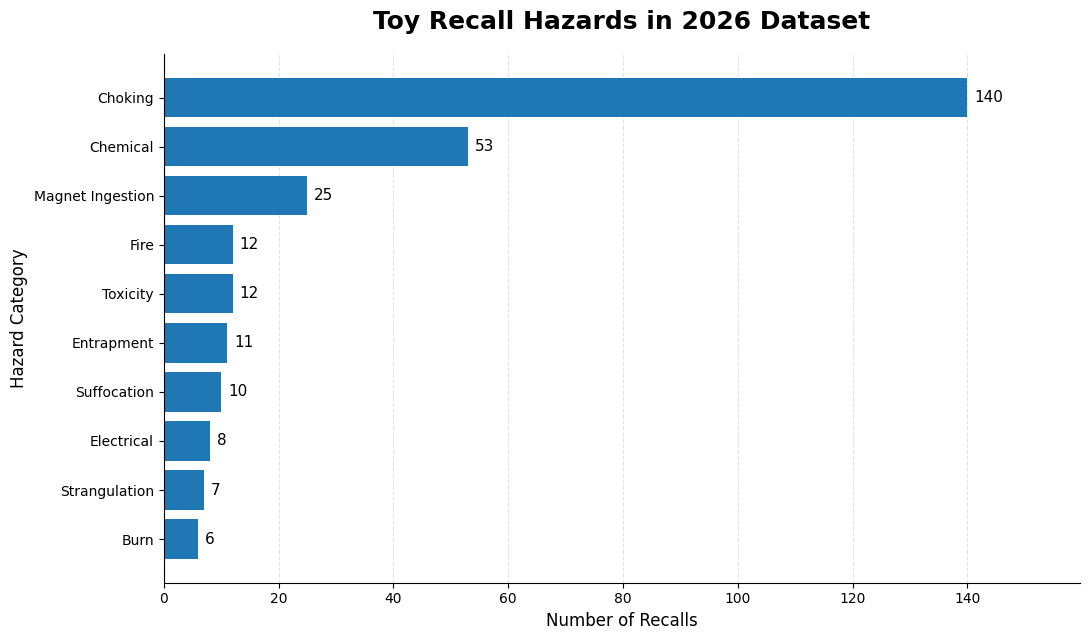
Fig 1. Top recall Hazards in 2026 Dataset
In the EU, toy risk mitigation begins before the product is placed on the market. The General Product Safety Regulation requires consumer products placed on the EU market to meet safety criteria, and manufacturers must prepare technical documentation that includes a risk analysis of potential risks linked to the product, together with the remedies or corrective measures used to eliminate or mitigate those risks. This can include testing reports and other evidence showing how the manufacturer assessed and controlled foreseeable hazards.
The Safety of Toys Directive reinforces this approach. Manufacturers must carry out sample testing of marketed toys where appropriate, investigate complaints, keep records of complaints, non-compliant toys and toy recalls, and keep distributors informed. Where a manufacturer has reason to believe that a toy placed on the market is not compliant with the relevant EU harmonisation legislation, it must take immediate corrective action to bring the toy into compliance, withdraw it or recall it where appropriate. Where the toy presents a risk, the competent national authorities must be informed and provided with details of the non-compliance and corrective measures taken.
The Directive also shows how design itself is central to risk mitigation. Toys must be durable and stable enough to withstand normal and foreseeable use without breaking, bending or causing injury. Edges, cords, fastenings and protrusions must be designed to reduce the risk of cuts, entanglement and other injuries. Moving parts must not create unnecessary risk. Toys must not cause strangulation, block airways or present small parts that can be swallowed or inhaled, particularly where children under three are concerned. Packaging must not create suffocation risks, toys in or with food must be separately and safely packaged, floating toys must remain buoyant, ride-on toys must include appropriate braking or speed controls, projectile toys must not create injurious force, and toys must not become too hot, release dangerous hot substances or expose children to damaging noise levels. The Directive also includes safety requirements covering flammability, chemical properties, electrical properties, hygiene and radioactivity.
In practice, this means EU toy compliance should be treated as a design architecture. The manufacturer should start with age grading, intended use and foreseeable misuse, then map the toy against the applicable physical, mechanical, chemical, electrical, flammability, hygiene and warning requirements. If this is done properly, many of the hazards that later appear in recalls should already have been addressed through design controls, supplier restrictions, testing and documentation.
The UK follows a similar risk mitigation model under the Toys (Safety) Regulations 2011. Manufacturers must take appropriate action to protect consumer health and safety, taking into account the risks presented by the toy. This includes sample testing of marketed toys, investigating complaints, keeping records of complaints, non-compliant toys and recalled toys, and keeping distributors informed of relevant actions.
Where a manufacturer believes that a toy placed on the market is not compliant, it must take corrective measures to bring the toy into compliance, or withdraw or recall the toy where appropriate. It must also inform the relevant enforcement authority of the risk, the non-compliance and the corrective measures taken. As with the EU framework, design is a key risk mitigation tool, because the design expectations in the UK toy framework are closely aligned with the EU approach.
For businesses, the UK position reinforces the importance of both pre-market and post-market controls. A toy should not only be tested before launch; it should also be monitored once it is on the market. Complaint handling, distributor communication, recall records and Product Safety Database awareness all form part of a practical recall prevention system.
In Canada, risk mitigation is centred on the Canadian Consumer Product Safety Act and the Toys Regulations. The Canadian Consumer Product Safety Act prohibits the manufacture, import, advertisement or sale of consumer products that pose an unreasonable danger to human health or safety. Manufacturers may also be ordered by the Minister of Health to conduct tests or studies to verify compliance or prevent non-compliance.
The Act also requires manufacturers and importers to report when they become aware of a serious incident or death, giving the government an early warning mechanism for unsafe products. The Minister may order a recall if a toy poses a risk to consumer health or safety and may issue written notices setting out the reasons for the recall and the time and manner in which it must be carried out. Where satisfactory voluntary action is not taken, further enforcement action may follow.
The Toys Regulations add a more toy-specific layer by addressing electrical, mechanical, auditory, toxicological, thermal and flammability hazards. For companies placing toys on the Canadian market, the practical mitigation strategy is to assess the specific hazard profile of each product. A toy for children under three, a sound-producing toy, an electrically operated toy, a plush toy, a projectile toy and a toy with detachable parts should not be reviewed in the same generic way. Each product type presents different foreseeable hazards and should have its own risk assessment, test plan and compliance file.
Australia provides a clear example of targeted risk mitigation through mandatory safety standards under the Australian Consumer Law. The safety standard for toys for children up to and including 36 months seeks to minimise choking and suffocation risks from small parts. It also requires accessible battery compartments in toys to be openable only with a tool and confirms that the button and coin battery safety standard applies to children’s toys.
Australia also has specific mandatory standards for magnetic toys, aquatic toys and projectile toys. The magnetic toy standard focuses on preventing serious internal injuries caused by ingestion of small, high-powered magnets, particularly where magnets are small enough to be ingested and exceed specified magnetic strength thresholds. The aquatic toy standard requires warnings that the product is not a lifesaving device and should only be used in shallow water under supervision. The projectile toy standard requires certain projectile toys to include warnings such as “Do not aim at eyes or face”, with warnings required to be in English, clearly legible, clearly visible and indelible.
This targeted approach shows how regulation can be used as a practical hazard checklist. If a toy contains small parts, magnets, button or coin batteries, aquatic play features or projectile functions, those characteristics should trigger early design review, not late-stage label fixes. The Australian model makes clear that certain toy features are inherently higher risk and should be assessed from the beginning of product development.
In China, toy risk mitigation is primarily achieved through compliance with the GB 6675 series of mandatory toy safety standards. These standards address mechanical and physical properties, flammability, chemical safety, electrical safety, hygiene and labelling. The GB 6675 framework is broadly aligned with international toy safety principles, but it contains China-specific requirements that must be considered before toys are manufactured, imported or sold in China.
Certain toy categories are also subject to China Compulsory Certification, meaning that applicable toys must be tested, certified and marked before being placed on the Chinese market. The updated GB 6675 toy safety series is expected to apply from 1 November 2026, which makes it particularly important for manufacturers and importers to check whether existing conformity files, test reports and labelling remain aligned with the applicable requirements.
For businesses, risk mitigation in China requires identifying the correct GB 6675 requirements for the toy type and age category, conducting appropriate pre-market testing, maintaining conformity evidence, checking labels and warnings, and monitoring products after sale. Particular attention should be paid to small parts, sharp edges, accessible projectiles, magnets, cords, flammable materials, harmful substances, batteries and electrical components, as these are common causes of toy-related injuries and recalls.
In Japan, toy risk mitigation involves a combination of product safety laws, voluntary toy safety standards and specific legal requirements for certain categories of children’s products. The Japan Toy Association operates the Safety Toy, or ST, Mark system, which is widely used in the Japanese market to demonstrate conformity with toy safety requirements covering mechanical and physical safety, flammability and chemical safety. Although the ST Mark system is generally industry-based, it is an important commercial and practical mechanism for showing that a toy has undergone conformity assessment by a designated testing body.
Japan has also introduced requirements under the Consumer Product Safety Act for toys intended for children under 36 months. These requirements came into force on 25 December 2025 and apply to infant toys as specified products. Manufacturers and importers must ensure conformity with government technical standards and provide required warnings, including target age range and precautions for use. Products that do not show that the relevant obligations have been fulfilled must not be sold.
Chemical risk mitigation is also important in Japan, particularly for toys intended for children under six years of age and toys that may be placed in the mouth. These may be subject to requirements under the Food Sanitation Act, including controls relating to harmful substances in materials that children may suck, chew or otherwise mouth. From a practical perspective, companies placing toys on the Japanese market should ensure correct age grading, testing against relevant ST or legal requirements, appropriate warnings and instructions, conformity evidence, complaint monitoring, incident investigation and corrective action procedures.
In the USA, toy risk mitigation is primarily governed by the Consumer Product Safety Improvement Act, the Consumer Product Safety Act, the Federal Hazardous Substances Act and mandatory rules enforced by the Consumer Product Safety Commission. ASTM F963 is the central mandatory toy safety standard. It is not simply a voluntary industry document; through the CPSIA, it operates as a nationwide mandatory children’s product safety rule.
Manufacturers and importers must identify which sections of ASTM F963 apply to the specific toy. Depending on the product, this may include requirements for mechanical and physical hazards, small parts, sharp points and edges, magnets, projectiles, cords, batteries, sound-producing toys, flammability, toxic substances and labelling. Not every section applies to every toy, which means risk mitigation requires a product-specific assessment rather than a generic assumption of conformity.
For children’s products, companies must also consider third-party testing by a CPSC-accepted laboratory, Children’s Product Certificates, lead and phthalate restrictions, and permanent tracking labels on the product and packaging. Tracking labels are particularly important because they support traceability in the event of a safety issue or recall.
The US framework also places strong emphasis on post-market responsibility. Businesses are expected to monitor complaints, incidents, injury reports and product defects. Where a manufacturer, importer, distributor or retailer obtains information that reasonably supports the conclusion that a product fails to comply with an applicable consumer product safety rule, contains a defect that could create a substantial product hazard, or creates an unreasonable risk of serious injury or death, the issue may need to be reported to the CPSC. In practical terms, US toy compliance is not complete at launch. It continues through surveillance, incident escalation, corrective action and recall readiness.
Seen through this risk mitigation lens, the first and most obvious priority is choking. When recall data is dominated by choking cases, that usually points to one of three failures: parts that are too small, parts that become detached during foreseeable use and abuse, or products that were mis-aged and placed in front of children who should never have had access to them.
The regulatory answer to this is not vague. In the EU, the Toy Safety Directive’s physical and mechanical requirements are aimed squarely at preventing toys and toy parts from creating risks of physical injury, including ingestion-related hazards. In the US, small parts that fit within the regulatory test cylinder are banned for toys intended for children under three where they create a choking, aspiration or ingestion hazard, and ASTM F963 adds product-specific design and abuse-testing provisions across many toy categories.
The mitigation strategy is straightforward. Age grading must be robust, detachable components need to be challenged through abuse testing early in development, packaging claims must match the actual developmental profile of the product, and quality teams need to verify that production variation does not turn a compliant design into a recall candidate. This is also where the country-by-country risk frameworks become practical. The EU requires risk analysis and corrective measures, the UK requires appropriate action based on the risks presented by the toy, Canada addresses mechanical hazards under its Toys Regulations, Australia specifically targets small parts in toys for children up to and including 36 months, and China’s GB 6675 framework requires careful consideration of small parts and age category.
The second major theme is chemicals. When chemical recalls appear again and again, the cause is often not that companies lack rules, but that they rely too heavily on generic supplier declarations without enough substance-level validation.
In the EU, the Toy Safety Directive contains specific chemical requirements, including migration limits for elements in toy materials, while toy-related phthalate restrictions are also reinforced through REACH limits on certain phthalates in toys and childcare articles. In the US, toys must comply with chemical limits built into ASTM F963 and with phthalate prohibitions under 16 CFR Part 1307, which prohibit specified phthalates above 0.1% in children’s toys and child care articles. Canada’s Toys Regulations address toxicological hazards, China’s GB 6675 framework includes chemical safety requirements, and Japan’s Food Sanitation Act may apply to toys intended for children under six or toys that may be placed in the mouth.
The mitigation here is less about end-of-line testing and more about disciplined materials governance. Companies need approved substance lists, bill-of-materials visibility down to inks, coatings and soft plastics, routine verification testing for higher-risk materials, and change-control systems that prevent reformulations from bypassing compliance review.
Magnet-related recalls deserve separate treatment because they are high-severity even when volumes appear lower than choking cases overall. Small, high-powered magnets are dangerous because multiple swallowed magnets can attract through intestinal tissue and cause life-threatening internal injuries.
CPSC states that ASTM F963 has long addressed magnets in toys, and Canada also highlights the specific danger of small powerful magnets in toys and novelty products. Australia’s magnetic toy safety standard directly targets the risk of internal injury from ingestion of small, high-powered magnets, including magnets small enough to be ingested and those exceeding the relevant magnetic flux threshold. China’s GB 6675 framework also requires attention to magnets as part of mechanical and physical safety risk mitigation.
For companies, mitigation means avoiding designs where high-flux magnets are accessible or can become small parts after abuse, paying close attention to retention in assembled products, and not assuming a warning label can compensate for a poor design choice. Where a magnet function is central to the toy, the design review should start with the hazard, not with the play pattern.
Button and coin battery incidents may appear less frequent in a given recall sample, but they remain one of the most acute product safety risks because ingestion can cause catastrophic internal burns in a very short period of time.
In the US, 16 CFR Part 1263 establishes performance and labelling requirements for consumer products containing button cell or coin batteries to prevent child access, and CPSC guidance links those requirements to Reese’s Law. Australia has gone further with mandatory safety and information standards for button and coin batteries and products containing them, including child-resistant packaging, testing and warning requirements, and those rules expressly cover toys among other consumer goods. The Australian toy standard for children up to and including 36 months also requires accessible battery compartments in toys to be openable only with a tool.
For manufacturers, the compliance takeaway is clear. Battery compartments must be child resistant in real use, not just in drawings. Foreseeable misuse has to be tested, warnings should support the design rather than replace it, and sourcing teams need to ensure that late-stage component substitutions do not weaken battery security.
Fire, electrical and thermal hazards also appear repeatedly in recalls, particularly where toys include electronics, rechargeable batteries, ride-on functions or mains-powered accessories.
Canada’s Toys Regulations expressly address electrical hazards, thermal hazards, flammability hazards and mechanical hazards in one regulatory framework. The broader US toy regime requires firms to identify which ASTM F963 sections apply to the specific toy type rather than treating the standard as a single generic check. The EU Toy Safety Directive also includes requirements on flammability, electrical properties and toys that may become hot or release hot liquids or gases. China’s GB 6675 framework covers flammability and electrical safety, while Japan’s ST Mark system includes flammability and mechanical safety elements.
This is where many businesses fail operationally. They test the headline product category, but do not properly map the full hazard profile created by electronics, chargers, battery packs, textiles, plastics, wiring and accessories. Effective mitigation means building a hazard matrix at concept stage, assigning each subsystem to the relevant clauses and standards, and validating the final configured product rather than isolated components only.
Activity toys, swings, trampolines and ride-on products are another recurring problem area because they combine mechanical stress, user movement and foreseeable misuse.
The EU’s toy safety framework relies on the Toy Safety Directive together with harmonised standards, including standards used for activity toys. The Directive also makes clear that toys such as climbing frames must minimise risks of falling, trapping, crushing or drowning and must be strong enough to support children’s weight. Ride-on toys must include effective braking or controlled speeds where relevant, and electrically driven ride-on toys must have a maximum design speed. Canada’s regulations also contain product-specific requirements for defined toy types, and Australia’s aquatic toy and projectile toy standards show how specific play patterns can trigger specific safety obligations.
The mitigation principle is that dynamic products cannot be assessed like static toys. Stability, load, entrapment spaces, access devices, restraints, braking, buoyancy and structural retention all need to be reviewed under worst-case use conditions. If a toy invites climbing, swinging, bouncing, floating, shooting or riding, the risk assessment has to assume the child will use it energetically and imperfectly.
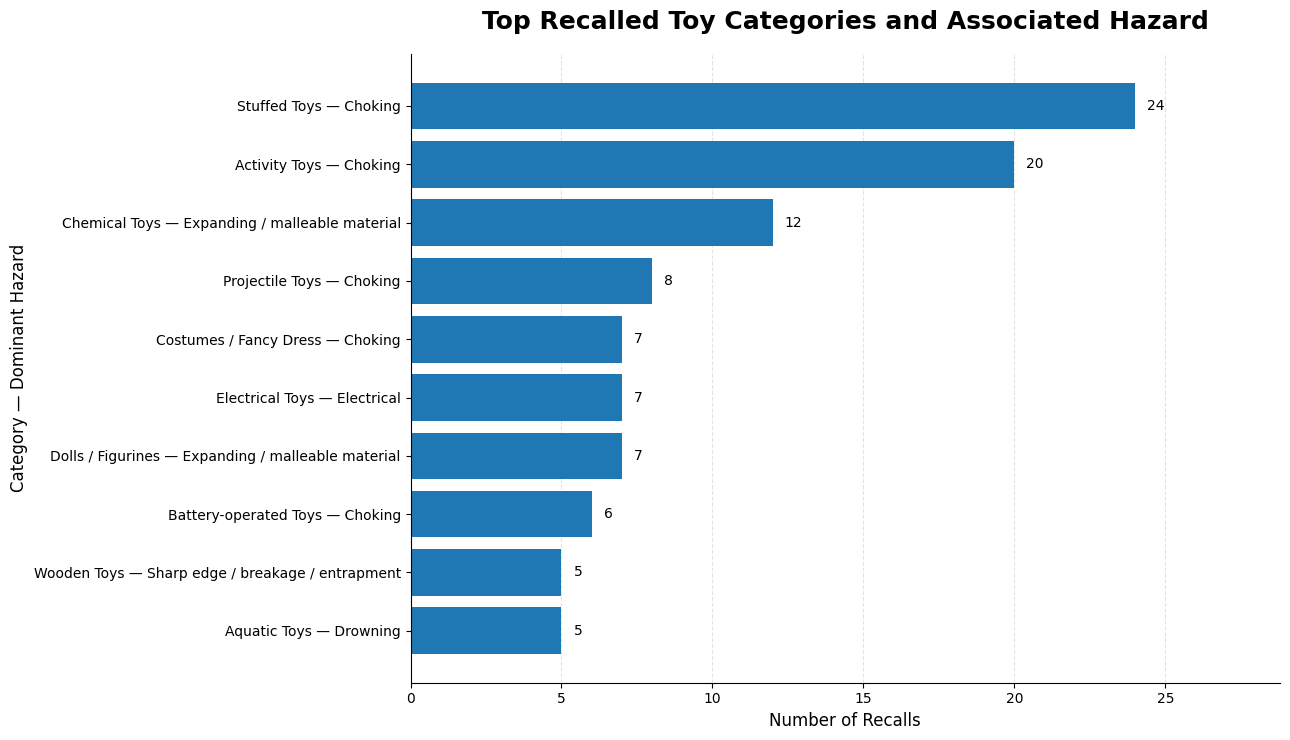
Fig 2. Top recalled Toy Categories and Associated Hazard
The recall data ultimately shows that toy regulation works best when it is used upstream. Companies that wait until pre-shipment testing to discover detachable small parts, restricted substances, excessive magnetic strength, insecure battery doors, unstable structures, flammable materials or electrical risks are already too late in the process.
The stronger model is to use toy regulations as a design and risk mitigation framework. That means starting with the intended age grade, product type and foreseeable misuse profile, then mapping the product against the applicable legal requirements in each target market. Those obligations should then be translated into engineering specifications, supplier restrictions, material controls, abuse testing, warning reviews, traceability systems, release gates and post-market surveillance procedures.
The country-by-country picture points in the same direction. The EU requires risk analysis, technical documentation, sample testing, complaint handling and corrective action. The UK requires manufacturers to take appropriate action based on the risks presented by the toy and to maintain complaint and recall records. Canada prohibits products that pose an unreasonable danger and requires reporting of serious incidents. Australia uses targeted mandatory standards for high-risk toy categories such as small parts, magnets, aquatic toys, projectile toys and button or coin batteries. China’s GB 6675 framework requires pre-market attention to mechanical, physical, chemical, electrical, flammability, hygiene and labelling risks. Japan combines the ST Mark system with legal requirements for infant toys and chemical controls for certain children’s products. The USA requires product-specific application of ASTM F963, third-party testing where applicable, Children’s Product Certificates, tracking labels and ongoing CPSC reporting awareness.
In that sense, the smartest toy companies do not view recalls as isolated bad luck or as evidence of tougher enforcement alone. They read them as a live map of preventable failure. If choking, chemical, magnet, battery, fire and mechanical hazards continue to dominate recall activity, then the market is telling us that the biggest opportunity is not simply faster recall response. It is better hazard prevention before the product ever reaches a child’s hands.
Explores global cybersecurity rules for connected products and the rise of certification and labeling schemes.