ACI Cosmetics Conference 2026: Key Takeaways
This blog was originally posted on 25th March, 2026. Further regulatory developments may have occurred after publication. To keep up-to-date with the latest compliance news, sign up to our newsletter.
AUTHORED BY BETH MCCALISTER, SENIOR REGULATORY CONTENT SPECIALIST, COMPLIANCE & RISKS
Key Insight
The overarching takeaway from this year’s ACI Legal, Regulatory, and Compliance Forum on Cosmetics and Personal Care Products is clear: in a fragmented market defined by MoCRA’s expanded federal powers and a patchwork of strict state laws, transparency is no longer just a trend; it is the first line of defense against both litigation and supply chain paralysis.
Introduction
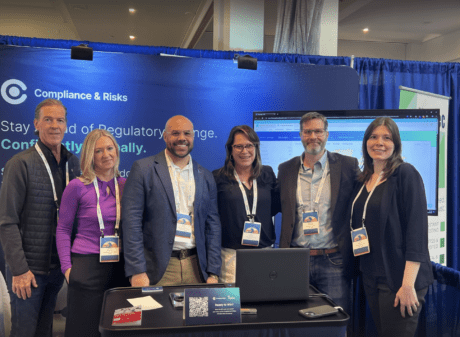
Last week I had the pleasure of attending the ACI’s 13th Annual Legal, Regulatory, and Compliance Forum on Cosmetics and Personal Care Products, held at the NY City Bar, March 12-13. The panels were enlightening, thorough, informative, and interesting, and the conference provided exceptional opportunities for networking with fellow industry professionals.
Below are key themes and takeaways from the conference.
For a deep dive into Regulatory Trends in Cosmetics, check out our guide for a 12-18 month outlook.
The New Era of Federal Oversight: MoCRA and the FDA
The implementation of the Modernization of Cosmetics Regulation Act (MoCRA) has fundamentally altered the federal landscape, moving cosmetics away from being one of the least regulated sectors under the FDA.
Key developments include:
- The first year of biennial facility registrations.
- Annual product listings.
- Strict 15-day windows for reporting serious adverse events.
While the FDA has received $2 million in 2025 for enforcement, there remains significant uncertainty regarding “adequate substantiation” for product safety and the pending final rule for asbestos testing in talc-containing products.
Furthermore, the FDA now possesses expanded authority to:
- Access and copy records, including safety records and adverse event reports.
- Review records related to serious adverse health consequences.
- Trigger mandatory recalls if voluntary efforts fail.
A Fragmented State Landscape
In the absence of full federal preemption, states like California, New York, and Washington are leading an aggressive “State-Driven Regulation” movement.
Companies now face:
- A patchwork of bans on ingredients such as PFAS, lead, and formaldehyde.
- Emerging Extended Producer Responsibility (EPR) requirements.
A major emerging challenge is Extended Producer Responsibility (EPR), which shifts the financial burden of waste disposal onto manufacturers, sometimes through eco-modulated fees based on packaging sustainability.
Conflicting labeling laws, such as California’s SB 343, which restricts the “chasing arrows” recycling symbol, make it difficult for brands to maintain a single compliant label for all 50 states.
Trade Turbulence and Import Challenges
Importing cosmetics into the U.S. has become a high-stakes endeavour due to trade turbulence and rapidly changing tariff policies.
Key challenges include:
- Average tariffs reaching a record 18%.
- Use of the International Emergency Economic Powers Act (IEEPA) to impose broad duties.
- Ongoing constitutional challenges to these duties.
Importers must also navigate:
- Stackable duties.
- Suspension of de minimis exceptions.
The latter has particularly affected direct-to-consumer models.
A critical bottleneck exists for sunscreens, which are regulated as drugs in the U.S., but cosmetics elsewhere. Mislabeling these products can lead to significant supply chain disruptions and Import Alerts.
Marketing Risks, AI, and Dupes
The rise of Generative AI and social media influencer culture has brought about a new frontier of litigation risk.
While AI offers efficiency in design, it can undermine consumer trust if images appear unauthentic or biased.
Brands are also grappling with the dupe market, where consumers (especially those in younger generations) knowingly purchase look-alike products.
Legal experts emphasize that:
- Both expressed and implied claims must be backed by robust data libraries.
- Claims such as “Clean,” “Natural,” and “Green” require substantiation.
- “Medical Grade” or “Made in USA” claims are under intense scrutiny.
Litigation can be triggered if a claim is misleading to even a small segment of the population.
Common Themes & Strategic Takeaways
Proactive vs. Reactive Compliance
- Experts warned that “once you ring the bell, you can’t unring it” regarding ingredient safety concerns (among other things!). Brands should engage trade and legal counsel during the R&D stage, rather than waiting for issues to emerge at the port or after a launch.
Transparency as a Strength
- Brands are encouraged to use ingredient transparency and sustainability data as marketing strengths to build consumer trust.
Interdepartmental Roadmaps
- Successful risk mitigation requires a roadmap connecting R&D, marketing, legal, and supply chain departments to ensure everyone understands the layers of risk in every product and its claims.
Stay Ahead Of Regulatory Changes in Cosmetics Compliance
Want to stay ahead of regulatory developments in Cosmetics?
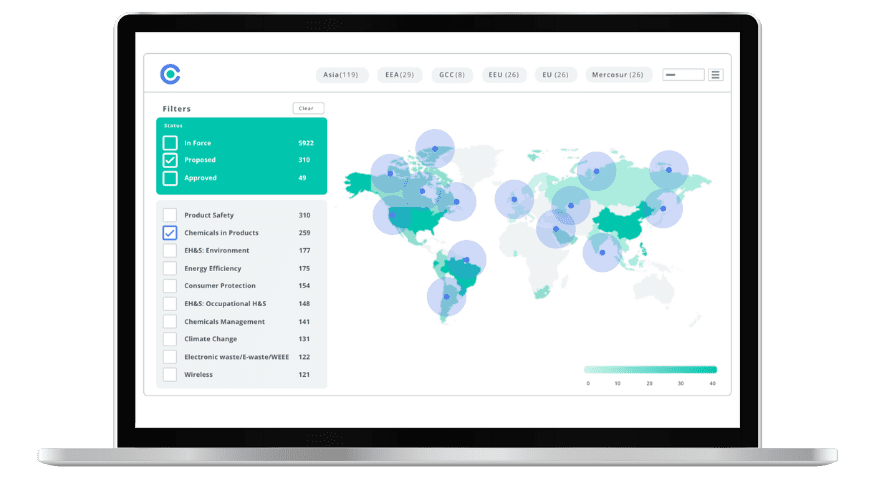
Accelerate your ability to achieve, maintain & expand market access for all products in global markets with C2P, your key to unlocking market access, trusted by more than 300 of the world’s leading brands. C2P is an enterprise SaaS platform providing everything you need in one place to achieve your business objectives by proving compliance in over 195 countries.
C2P is purpose-built to be tailored to your specific needs with comprehensive capabilities that enable enterprise-wide management of regulations, standards, requirements and evidence.
Add-on packages help accelerate market access through use-case-specific solutions, global regulatory content, a global team of subject matter experts and professional services.
- Accelerate time-to-market for products
- Reduce non-compliance risks that impact your ability to meet business goals and cause reputational damage
- Enable business continuity by digitizing your compliance process and building corporate memory
- Improve efficiency and enable your team to focus on business critical initiatives rather than manual tasks
- Save time with access to Compliance & Risks’ extensive Knowledge Partner network
Simplify Corporate Sustainability Compliance
Six months of research, done in 60 seconds. Cut through ESG chaos and act with clarity. Try C&R Sustainability Free.