The Unseen Invoice: Unpacking the True Financial Impact of Compliance Failures
THIS BLOG WAS WRITTEN BY THE COMPLIANCE & RISKS MARKETING TEAM TO INFORM AND ENGAGE. HOWEVER, COMPLEX REGULATORY QUESTIONS REQUIRE SPECIALIST KNOWLEDGE. TO GET ACCURATE, EXPERT ANSWERS, PLEASE CLICK “ASK AN EXPERT.”
You know that feeling when you’re diligently working to keep your business on the right side of the law, pouring resources into compliance, and still wonder if it’s truly paying off? It can feel like a bottomless pit, an unavoidable expense. But here’s the honest truth: the cost of compliance pales in comparison to the devastating financial fallout of non-compliance. It’s not just about avoiding fines; it’s about safeguarding your entire enterprise.
Think about it this way: compliance isn’t a cost center; it’s a financial shield, protecting your balance sheet from unseen — and often staggering — liabilities. Many organizations focus on the explicit, easily quantifiable penalties, but that’s just the tip of the iceberg. The real financial damage from compliance failures seeps into every corner of your business, from lost revenue and reputational ruin to operational paralysis and even talent drain.
This article isn’t just going to tell you that non-compliance is expensive. It’s going to show you how it’s expensive, providing the frameworks and insights you need to quantify these risks and build an undeniable business case for proactive compliance investment. Because in today’s rapidly evolving regulatory landscape, ignoring the true cost of failure isn’t just risky – it’s financially irresponsible.
Key Takeaways
- A robust ROI model for compliance investment (Avoided Non-Compliance Costs – Compliance Investment) / Compliance Investment) proves that proactive measures are a strategic financial decision, not just an overhead.
- Non-compliance costs average $14.82 million, more than twice the $5.47 million average cost of compliance. This staggering difference highlights the criticality of proactive investment.
- Beyond fines, businesses face significant indirect and imputed costs including revenue loss ($4-5.87 million per incident), business disruption (over $5.1 million), and reputational damage.
- Technical methodologies like “Labor Claiming” and “Unit Pricing” provide concrete ways to quantify hidden costs like diverted staff time and lost sales from recalls.
- Emerging threats like AI governance, data sovereignty, and supply chain due diligence are escalating future compliance costs, demanding forward-looking strategies.
Table of Contents
- The Alarming Truth: Non-Compliance Costs Outstrip Prevention
- Beyond the Fine Print: Deconstructing the Direct Costs of Non-Compliance
- Fines and Penalties: The Immediate Hit
- Legal Fees and Remediation: The Endless Bill
- The Invisible Iceberg: Unpacking Indirect and Imputed Costs
- Reputational Damage: The Erosion of Trust and Revenue
- Operational Disruption: The Productivity Drain
- Opportunity Costs: The Road Not Taken
- Insurance Premiums and Audit Scrutiny: A Spiraling Cycle
- Talent Drain: The Human Cost with Financial Fallout
- Quantifying the Unquantifiable: Technical Approaches to Imputed Costs
- The “Labor Claiming” Method
- “Unit Pricing” and “Deviation from Ideal”
- Cost of Capital & Foregone Investment
- Future-Proofing Your Balance Sheet: Emerging Compliance Threats
- The AI Governance Frontier: New Liabilities, Heavier Fines
- Data Sovereignty and Privacy: Global Fines, Local Impact
- ESG & Supply Chain Due Diligence: Your Entire Value Chain is a Risk
- The Shift to Demonstrable Governance: Prove It or Pay Up
- The Proactive Advantage: Building an ROI Case for Compliance Investment
- The Compliance ROI Model: A Formula for Success
- Beyond Cost Avoidance: Strategic Value Creation
- Actionable Strategies: Mitigating Financial Risk Through Smart Compliance
- Key Takeaways
- Frequently Asked Questions
- Conclusion: From Risk to Resilience
- Sources
The Alarming Truth: Non-Compliance Costs Outstrip Prevention
Let’s cut straight to the chase: the numbers don’t lie. Non-compliance is, on average, more than double the cost of compliance. We’re talking an average of $14.82 million for non-compliance compared to $5.47 million for compliance efforts. That’s a 45% increase in non-compliance costs over the last decade alone, and honestly, it’s a trend that’s only accelerating.
Here’s why this paradox persists. Many organizations view compliance as a reactive burden, something to be addressed after a new regulation comes out or, worse, after a failure. They don’t account for the complete financial picture – the intricate web of direct and indirect costs that quickly spiral out of control when things go wrong.
This isn’t just about big headlines and massive corporate fines, though those certainly exist. It’s about the pervasive financial drag that an inadequate compliance posture imposes on your business, day in and day out. It impacts everything from your innovation budget to your ability to attract and retain top talent. And that’s exactly what MOFU readers, those of you comparing solutions, need to understand to justify a strategic investment.
Beyond the Fine Print: Deconstructing the Direct Costs of Non-Compliance
When most people think of the financial impact of compliance failures, they immediately jump to fines. And they’re right to a degree – these are the most visible, undeniable hits to your bottom line.
Fines and Penalties: The Immediate Hit
Whether it’s a data privacy violation, an environmental breach, or an anti-money laundering (AML) lapse, regulatory bodies aren’t shy about imposing hefty financial penalties. In 2024 alone, global fines for non-compliance hit a staggering $14 billion, with financial institutions facing average compliance costs of $30.9 million annually.
These aren’t static figures either. A single non-compliance event can lead to organizations losing an average of $4 to $5.87 million in revenue. And if a data breach has a non-compliance factor embedded within it? That’s an average of $174,000 more than a standard breach, totaling $4.61 million overall. We’re talking about numbers that can seriously impact your profitability and even threaten solvency for smaller firms. It’s not just a slap on the wrist; it’s a gut punch.
Legal Fees and Remediation: The Endless Bill
But the fine is rarely the end of it. Once a compliance failure occurs, the meter starts running on a host of associated costs that can quickly dwarf the initial penalty.
- Investigation Costs: Uncovering the root cause of the failure, often requiring external legal counsel, forensic auditors, and specialized consultants. This is meticulous, time-consuming, and expensive work.
- Defense Costs: Fighting regulatory charges, responding to civil lawsuits, and managing potential class-action litigation can tie up significant legal resources for months or even years.
- Remediation Expenses: Once a failure is identified, you have to fix it. This might involve recalling faulty products, overhauling internal systems, investing in new technology, or retraining entire departments. And it’s not cheap. Think about the direct costs of manufacturing, shipping, and handling for a widespread product recall.
These aren’t hypothetical scenarios; they are daily realities for businesses navigating the intricate global regulatory landscape.
The Invisible Iceberg: Unpacking Indirect and Imputed Costs
This is where the true financial devastation often hides. While direct costs are explicit and easily itemized, indirect and imputed costs are harder to quantify, yet often far more impactful in the long run.
- Indirect Costs are consequences of the compliance failure that aren’t direct cash outlays but still cost the company.
- Imputed Costs are the opportunity costs of internal resources (like employee time or company capital) that are diverted from value-generating activities to deal with the failure.
Understanding these distinctions is crucial for a complete financial picture.
Reputational Damage: The Erosion of Trust and Revenue
This is, perhaps, the most insidious of all costs. A compliance failure – especially one involving data breaches, ethical lapses, or product safety concerns – can shatter public trust in an instant. And trust, as you know, is agonizingly slow to rebuild.
When your brand takes a hit, it translates directly to your bottom line. Think about:
- Customer Churn: Disappointed customers will vote with their wallets. Studies show that 75% of consumers won’t buy from companies they don’t trust.
- Lost Sales & Revenue: Potential customers, seeing your company in a negative light, will opt for competitors. This isn’t just a temporary dip; it can be a sustained drain on your revenue streams.
- Decline in Shareholder Value: For public companies, reputational damage often leads to a drop in stock prices, eroding shareholder confidence and market capitalization.
- Reduced Brand Value: Your brand isn’t just a logo; it’s an asset. Its value diminishes with every negative headline, impacting everything from pricing power to partnerships.
This isn’t about some abstract concept. It’s about dollars and cents that slip through your fingers because you failed to protect your brand’s most valuable asset: its integrity.
Operational Disruption: The Productivity Drain
When a compliance failure occurs, it sends ripples throughout your operations. You’re not just paying a fine; you’re stopping business as usual.
- Business Halts: Regulators might impose injunctions, suspend operations, or revoke licenses, causing immediate and significant revenue loss.
- Resource Diversion: Key personnel – executives, legal teams, IT, and even operational staff – are pulled away from their core, value-generating activities to address the crisis. Their time, often high-value, becomes an imputed cost of non-compliance.
- Rework and Redesign: Products or processes found to be non-compliant often require extensive rework, redesign, and re-certification, leading to delays, wasted materials, and increased labor costs.
- Supply Chain Disruption: A single compliance failure can impact your entire supply chain, leading to delays, broken contracts, and strained relationships with suppliers and distributors.
The average cost of business disruption due to non-compliance is over $5.1 million, a figure that truly underscores the operational drag.
Opportunity Costs: The Road Not Taken
This is arguably the hardest cost to quantify, but it’s critically important. Opportunity costs are the benefits you miss out on when resources (time, money, personnel) are diverted to dealing with a compliance failure instead of being invested in growth, innovation, or strategic initiatives.
- Lost Innovation: Instead of developing new products or improving existing ones, your R&D teams are helping with remediation.
- Delayed Market Entry: A product recall or regulatory investigation can delay the launch of a new offering, allowing competitors to capture market share.
- Competitive Disadvantage: While you’re entangled in investigations and remediation, agile competitors are advancing, potentially leaving you behind.
- Foregone Investments: Capital that could have been used for expansion, technology upgrades, or strategic acquisitions is now tied up in legal fees and reactive measures.
This isn’t just about what you lost; it’s about what you could have gained but didn’t. It’s a silent killer of growth and potential.
Insurance Premiums and Audit Scrutiny: A Spiraling Cycle
A history of compliance failures doesn’t go unnoticed. Insurance providers see you as a higher risk, leading to:
- Increased Premiums: Your Directors & Officers (D&O) insurance, cyber liability, and general liability premiums will likely skyrocket.
- Stricter Terms: Insurers might impose higher deductibles, lower coverage limits, or exclude certain risks altogether.
Furthermore, regulatory bodies and external auditors will place your organization under greater scrutiny. This means more frequent, in-depth, and costly audits, diverting even more internal resources.
Talent Drain: The Human Cost with Financial Fallout
Compliance failures create a toxic work environment. Employees, especially top talent, want to work for ethical, stable companies. When your company is embroiled in a scandal:
- Low Morale: Uncertainty, negative press, and increased workload from crisis management can devastate employee morale.
- Retention Issues: Talented employees might seek opportunities elsewhere, leading to costly turnover and loss of institutional knowledge.
- Recruitment Challenges: Attracting new talent becomes harder when your company has a tarnished reputation, leading to longer hiring cycles and potentially higher salary demands.
Each of these human costs has a tangible financial impact, from recruitment fees to decreased productivity.
Quantifying the Unquantifiable: Technical Approaches to Imputed Costs
Alright, so how do we actually put numbers to these “invisible” costs? This is where strategic thinking and a few clever methodologies come in. Moving beyond general statements, we can use specific frameworks to start calculating imputed and opportunity costs.
The “Labor Claiming” Method
This method focuses on the cost of personnel hours diverted from their regular duties to address a compliance failure. Every hour a senior executive or a specialist engineer spends on crisis management, legal responses, or remediation is an hour not spent on their primary, value-generating work.
Formula: Imputed Labor Cost = (Hourly Rate of Diverted Personnel) × (Number of Diverted Personnel) × (Hours Spent on Failure)
Example: If 10 key employees (average blended hourly rate of $150) spend 20 hours each per week for 4 weeks responding to a product recall: 150 × 10 × (20 × 4) = $150 × 10 × 80 = $120,000.
This $120,000 is an imputed cost – money not spent directly, but value lost.
“Unit Pricing” and “Deviation from Ideal”
These methods help quantify the financial impact of lost sales, rework, or products that cannot be sold due to non-compliance.
- Unit Pricing for Recalls/Rework: Formula: Rework/Recall Cost = (Cost per Unit for Rework/Recall) × (Number of Affected Units). This quantifies direct material and labor waste.
- Deviation from Ideal (Lost Sales): This applies when a non-compliance event prevents a product from being launched or removes it from the market, leading to lost revenue compared to an “ideal” scenario where compliance was maintained. Formula: Lost Sales Opportunity = (Projected Revenue if Compliant) – (Actual Revenue during Non-Compliance Period). Or, for a new product: Lost Market Entry Value = (Estimated Market Share) × (Total Market Size) × (Product Profit Margin). This quantifies the revenue that could have been generated.
Cost of Capital & Foregone Investment
When capital is tied up in fines, legal fees, or remediation, it’s capital that can’t be invested elsewhere.
Formula: Foregone Investment Return = (Amount of Capital Diverted) × (Expected Rate of Return on Alternative Investment).
Example: If $5 million is spent on a fine and remediation that could have been invested in a new product line with an expected 15% annual return: $5,000,000 × 0.15 = $750,000. This $750,000 is an annual opportunity cost, representing the value you could have created but didn’t.
By employing these technical approaches, you can move beyond vague estimates and build a more precise, data-backed understanding of your true financial exposure.
Future-Proofing Your Balance Sheet: Emerging Compliance Threats
The regulatory landscape isn’t static; it’s a rapidly shifting environment driven by technological advancements, global interconnectedness, and evolving societal expectations. Ignoring these emerging trends isn’t just risky; it’s a recipe for significant financial upheaval.
The AI Governance Frontier: New Liabilities, Heavier Fines
Artificial intelligence is transforming industries, but with great power comes great responsibility – and new regulations. Governments worldwide are scrambling to enact AI governance frameworks (e.g., the EU AI Act). Non-compliance here isn’t just a technical glitch; it’s a major financial and ethical liability.
Think about:
- Bias in Algorithms: Discriminatory AI systems can lead to massive lawsuits, regulatory fines, and irreparable reputational damage.
- Data Security in AI: AI models trained on sensitive data introduce new attack vectors and compliance challenges, escalating data breach risks and their associated costs.
- Lack of Explainability: Regulators will demand transparency in how AI makes decisions. Failing to provide this can lead to penalties and rejection of your AI-driven products or services.
The cost of non-compliance with new AI regulations will likely be astronomical, dwarfing current data privacy fines.
Data Sovereignty and Privacy: Global Fines, Local Impact
GDPR was just the beginning. The trend towards data sovereignty – the idea that data is subject to the laws and governance structures of the nation it is collected in – is intensifying. Countries are enacting their own stringent data protection laws, creating a complex web of overlapping and sometimes conflicting requirements.
This means:
- Escalating Fines: The fines for privacy breaches are growing, reaching billions for major corporations.
- Operational Complexities: Managing data across multiple jurisdictions, each with unique storage, processing, and transfer requirements, adds immense operational overhead and risk.
- Geopolitical Risks: Data access demands from foreign governments, combined with local privacy laws, create a precarious balance, exposing businesses to political and legal crossfire.
ESG & Supply Chain Due Diligence: Your Entire Value Chain is a Risk
Environmental, Social, and Governance (ESG) factors are no longer just buzzwords; they are becoming legally mandated compliance areas. Companies are increasingly held accountable not just for their own practices, but for those of their entire supply chain. Regulations like the German Supply Chain Due Diligence Act and the proposed EU Corporate Sustainability Due Diligence Directive (CSDDD) mean you’re responsible for human rights and environmental compliance far beyond your direct operations.
- Financial Fallout of Poor ESG: Investors are divesting from companies with poor ESG records, impacting access to capital and valuation.
- Supply Chain Disruption & Penalties: Non-compliance by a supplier can lead to fines for your company, product recalls, and severe reputational damage.
- Increased Auditing & Reporting: The burden of proving ESG compliance and supply chain due diligence will require significant investment in monitoring, auditing, and reporting technologies and personnel.
The Shift to Demonstrable Governance: Prove It or Pay Up
Regulatory expectations are shifting. It’s no longer enough to intend to comply or to have a policy on paper. Regulators now demand demonstrable governance – documented evidence that you have robust systems, controls, and processes in place and that they are actually working. This applies to everything from AI use to digital communications archiving.
This means:
- Increased Scrutiny: Regulators are becoming more sophisticated, using data analytics to identify potential non-compliance before it becomes a major incident.
- Punitive Penalties: The “willful neglect” clause is being applied more broadly, leading to harsher penalties for companies that can’t prove their compliance efforts.
- Investment in Proof: Organizations must invest in integrated platforms that not only track regulations but also manage requirements and evidence, providing an auditable trail of compliance.
This isn’t about guesswork. It’s about having the intelligence and the tools to anticipate, manage, and prove your compliance efforts effectively.
The Proactive Advantage: Building an ROI Case for Compliance Investment
Given the staggering costs of failure, proactive compliance isn’t an expense; it’s an intelligent investment with a clear and compelling return. This is the crucial point for MOFU readers who need to justify these investments to their stakeholders.
The Compliance ROI Model: A Formula for Success
The Return on Investment (ROI) for compliance can be precisely modeled by considering the costs avoided versus the investment made.
Formula: Compliance ROI = (Avoided Non-Compliance Costs – Compliance Investment) / Compliance Investment.
Let’s break down how to quantify “Avoided Non-Compliance Costs”:
- Estimate Potential Non-Compliance Events: Based on industry benchmarks, internal risk assessments, and historical data, estimate the likelihood and severity of various compliance failures over a given period (e.g., annually).
- Quantify Expected Costs of Each Event: For each potential event, sum up:
- Direct Costs: Expected fines, legal fees, remediation expenses.
- Indirect Costs: Estimated revenue loss, operational disruption, reputational damage (using a percentage of annual revenue or brand value).
- Imputed Costs: Calculate using the technical methodologies (Labor Claiming, Unit Pricing, etc.) discussed earlier.
- Calculate Total Potential Non-Compliance Costs: Multiply the probability of each event by its total expected cost and sum these values. This gives you a comprehensive picture of your financial exposure without proactive compliance.
- Determine Impact of Proactive Compliance: Estimate by what percentage your compliance investment will reduce the likelihood and/or severity of these potential events. This reduction is your “Avoided Non-Compliance Costs.”
By using this framework, you can demonstrate exactly how a robust compliance program directly shields the company from significant financial drain.
Beyond Cost Avoidance: Strategic Value Creation
But the ROI of compliance extends beyond just avoided costs. Proactive compliance also generates significant strategic value:
- Competitive Advantage: Companies with strong compliance records are more trusted by customers, partners, and investors, giving them an edge in the market.
- Enhanced Trust and Brand Equity: A reputation for integrity opens doors, attracts better talent, and fosters customer loyalty.
- Operational Efficiency: Integrated compliance systems streamline processes, reduce manual effort, and free up resources for strategic initiatives.
- Faster Market Entry: Confident compliance allows for quicker product development and market launches without the fear of regulatory roadblocks.
- Better M&A Opportunities: A clean compliance slate makes your company more attractive for mergers, acquisitions, or divestitures.
Compliance, when done right, is a strategic enabler, not just a defensive measure.
Actionable Strategies: Mitigating Financial Risk Through Smart Compliance
So, what does “smart compliance” actually look like in practice? It’s about leveraging technology, expert knowledge, and a proactive mindset to build a resilient and financially sound organization.
- Implement Advanced GRC (Governance, Risk, and Compliance) Platforms: A centralized system for tracking global regulations, managing requirements, assessing risks, and demonstrating adherence is non-negotiable. It integrates all compliance functions, ensuring global teams are aligned and audit-ready. The C2P platform is transformative for organizations seeking this level of integration.
- Leverage AI and Automation: AI-driven solutions can revolutionize compliance monitoring, identifying regulatory changes, flagging potential risks, and automating routine reporting. This significantly reduces manual effort, improves accuracy, and provides real-time insights into your compliance posture.
- Continuous Risk Assessments with Forward-Looking Insights: Compliance isn’t a check-box exercise. It requires ongoing compliance risk metrics that incorporate emerging trends like AI governance, data sovereignty, and supply chain due diligence, keeping you ahead of the curve.
- Robust Employee Training and Cultural Embedment: Compliance is everyone’s responsibility. Regular, engaging training programs, coupled with a culture that champions ethical behavior and compliance from the top down, are essential to minimize human error and foster vigilance.
- Develop a Strong Data Governance Strategy: With increasing data privacy and sovereignty regulations, understanding where your data resides, who has access to it, and how it’s protected is paramount. This proactive approach minimizes breach risks and associated financial penalties.
Key Takeaways
- The financial consequences of compliance failures are far more extensive than commonly perceived, extending well beyond fines to impact revenue, reputation, and operational efficiency.
- Proactive compliance, enabled by advanced solutions and expert insights, is a strategic investment that yields significant ROI through cost avoidance and value creation.
- Ignoring emerging regulatory trends (AI governance, data sovereignty, supply chain due diligence) is a high-stakes gamble with potentially catastrophic financial outcomes.
Frequently Asked Questions (FAQ)
- What is the average cost of non-compliance? The average cost of non-compliance is a staggering $14.82 million, which is more than twice the average cost of proactive compliance. This figure has seen a 45% increase over the past decade, underscoring the escalating financial risks.
- How can I calculate the indirect costs of a compliance failure? Indirect costs, such as reputational damage, operational disruption, and opportunity costs, can be quantified using various methodologies. For instance, the “Labor Claiming” method calculates the value of diverted staff time, while “Unit Pricing” and “Deviation from Ideal” assess lost revenue from recalls or missed market opportunities. These methods move beyond explicit expenses to capture the true economic impact.
- What role does AI play in mitigating financial compliance risks? AI and automation are becoming crucial tools for proactive compliance. They can help in continuously monitoring vast regulatory changes, identifying potential non-compliance risks in real-time, automating reporting, and streamlining compliance processes. By improving efficiency and accuracy, AI helps organizations avoid costly failures and associated financial penalties.
- Is compliance an expense or an investment? While traditionally viewed as an expense, a robust and proactive compliance program should be considered a strategic investment. The significant financial impact of non-compliance – including massive fines, lost revenue, reputational damage, and operational disruption – far outweighs the cost of prevention. Investing in compliance generates a clear return through risk mitigation, cost avoidance, and enhanced business value.
- How do emerging regulations impact future compliance costs? Emerging regulatory trends, particularly in areas like AI governance, data sovereignty, ESG, and supply chain due diligence, are set to significantly escalate future compliance costs. These new regulations introduce complex liabilities, demand demonstrable governance, and expand the scope of compliance responsibility across entire value chains, requiring substantial investment in advanced solutions and expert knowledge to avoid punitive penalties.
Conclusion: From Risk to Resilience
The true financial impact of compliance failures isn’t a theoretical concern; it’s a measurable threat to your organization’s stability and growth. Relying on reactive measures or underestimating the full spectrum of direct, indirect, and imputed costs is a perilous path. The evidence is clear: the cost of compliance is an investment that pays for itself many times over by preventing far greater losses.
By understanding the intricate financial consequences, quantifying risks, and strategically investing in comprehensive regulatory intelligence, you can transform compliance from a perceived burden into a powerful competitive advantage. It’s about building resilience, fostering trust, and ensuring your balance sheet is protected against the unforeseen.
Don’t let the unseen invoice surprise you. Take control of your compliance strategy now.
Explore our C2P platform and discover how our advanced regulatory intelligence and expert insights can safeguard your business against financial risk and empower confident decision-making.
Sources
- Hyperproof, “50+ Compliance Statistics to Inform Your Strategy”
- Secureframe, “130+ Compliance Statistics & Trends to Know for 2026”
- Colligo, “The True Cost of Non-Compliance”
- StarCompliance, “The Global Cost of Non-Compliance in 2024”
- Avatier, “The True Cost of Compliance Failures: Beyond Financial Penalties”
- Greenlight Guru, “Calculating Nonconformance Costs in the MedTech Industry”
- NetVendor, “The Startling Cost of Non-Compliance for Property Managers”
- Coalfire, “2026 Compliance Outlook: AI, Privacy, and Global Risk Trends”
- GAN Integrity, “2026 Risk and Compliance Trends on the Horizon”
- Thomson Reuters, “10 global compliance concerns for 2026”
- Smarsh, “2026 Regulatory & Compliance Predictions: From Recalibration to…”
- Ropes & Gray, “Risk and Compliance in 2026: Six Key Themes Shaping Enforcement and Regulatory Scrutiny”
- Investopedia, “What Are Imputed Costs? Understanding Opportunity…”
- Khan Academy, “Explicit and implicit costs and accounting and economic profit”
- The Balance Money, “Business Cost Categories to Track Expenses”
Experience the Future of ESG Compliance
The Compliance & Risks Sustainability Platform is available now with a 30-day free trial. Experience firsthand how AI-driven, human-verified intelligence transforms regulatory complexity into strategic clarity.
👉 Start your free trial today and see how your team can lead the future of ESG compliance.
The future of compliance is predictive, verifiable, and strategic. The only question is: Will you be leading it, or catching up to it?
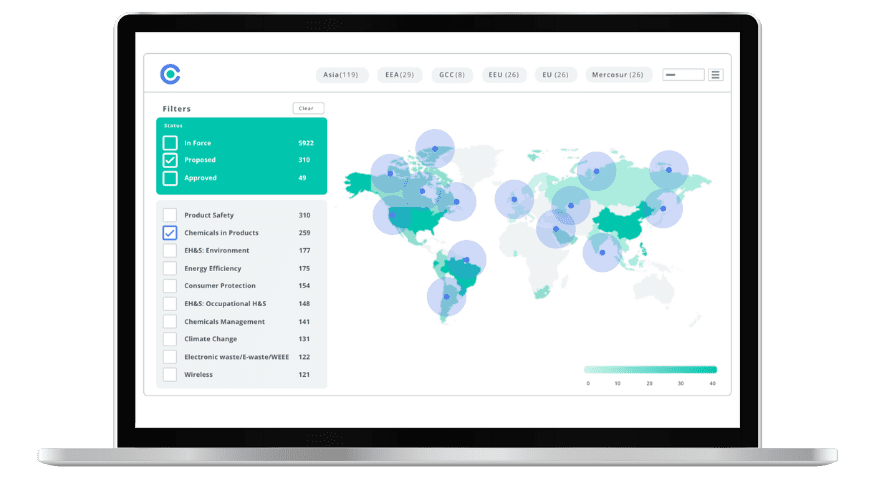
Simplify Corporate Sustainability Compliance
Six months of research, done in 60 seconds. Cut through ESG chaos and act with clarity. Try C&R Sustainability Free.