
June 18th, 2025
WATCH ON-DEMAND

This blog was originally posted on 4th May, 2026. Further regulatory developments may have occurred after publication. To keep up-to-date with the latest compliance news, sign up to our newsletter.
AUTHORED BY AARON GREEN, SENIOR REGULATORY COMPLIANCE SPECIALIST; CRISTIAN BARROSO, REGULATORY COMPLIANCE SPECIALIST; AND HANNAH JANKNECHT, REGULATORY COMPLIANCE SPECIALIST; COMPLIANCE & RISKS
The 22nd Law and the Environment Conference took place on 23 April 2026 at University College Cork (UCC), Ireland. Organized by the UCC School of Law in collaboration with McCann Fitzgerald, this annual event serves as a forum for discussing and engaging with a broad spectrum of issues in environmental law, regulation, and policy.
This year’s theme, Consolidation in Environmental Law, examined whether the discipline has matured to a point where codifying its broad body of principles, rules, and standards is necessary to strengthen internal consistency.
A diverse panel of legal practitioners, academics and representatives from non-profit organisations shared insights on current trends in climate and planning law, the role of science in consolidating environmental legislation, the EU’s Omnibus Packages, Circular economy trends and more.
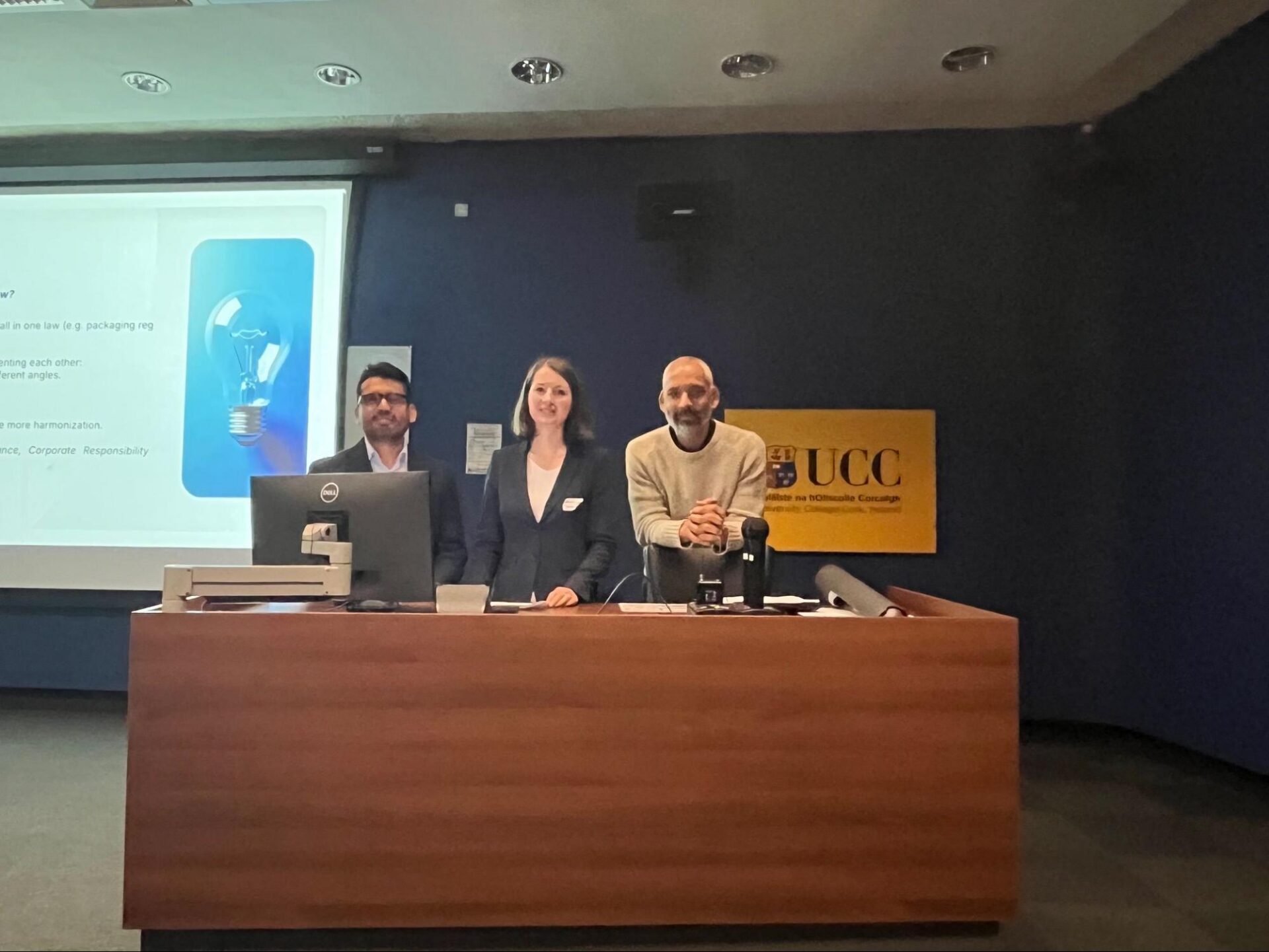
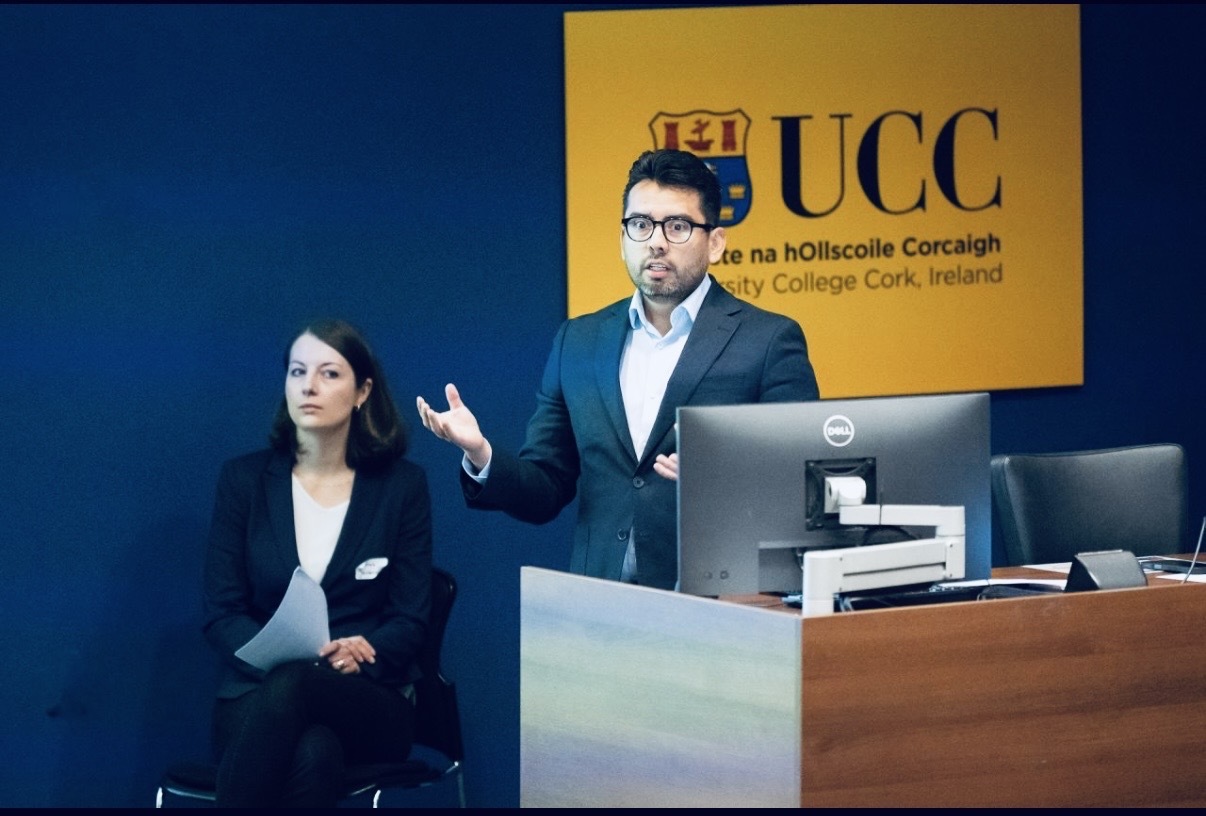
In “The EU’s New Circular Economy Framework as a Model for Normative Consolidation in Environmental Law”, Hannah Janknecht and Cristian Barroso, Regulatory Compliance Specialists at Compliance & Risks, examined the EU’s shift towards regulating the entire product sustainability journey within a single, integrated framework, as evidenced for example by the Batteries and Waste Batteries Regulation (EU) 2023/1542 and the Packaging and Packaging Waste Regulation (EU) 2025/40.
The presentation highlighted the EU’s escalating waste problem, pointing to rising volumes of electronic, textile, packaging, and battery waste, coupled with low recycling rates. It contrasted the EU’s earlier “piecemeal” regulatory approach, which focused too heavily on waste management and specific energy‑related products, leaving major product design opportunities unaddressed, with the more holistic vision set out in the 2020 Circular Economy Action Plan. This policy shift aims to embed sustainability across the entire product life‑cycle.
The new emerging framework, implemented through instruments such as the Ecodesign for Sustainable Products Regulation (EU) 2024/1781, the Batteries Regulation (EU) 2023/1542, the Packaging Regulation (EU) 2025/40, and the Right to Repair Directive (EU) 2024/1799, aims to make sustainable products the norm. Key measures include delegated acts defining product‑specific ecodesign rules, the introduction of Digital Product Passports, and bans on destroying unsold consumer goods.
Taken together, these measures signal a move toward consolidating EU product‑sustainability law into comprehensive, lifecycle‑based regulations rather than scattered directives, creating less divergence in Member State implementation and enforcement. The regulations are designed to interlock, for example, by covering repairability through product design requirements, consumer information, and consumer rights angles, thereby creating a more harmonized and coherent framework.
Finally, the presentation also noted a growing divergence in EU sustainability policy: while product‑level rules are accelerating, broader corporate‑responsibility initiatives appear to be losing some of their initial momentum.
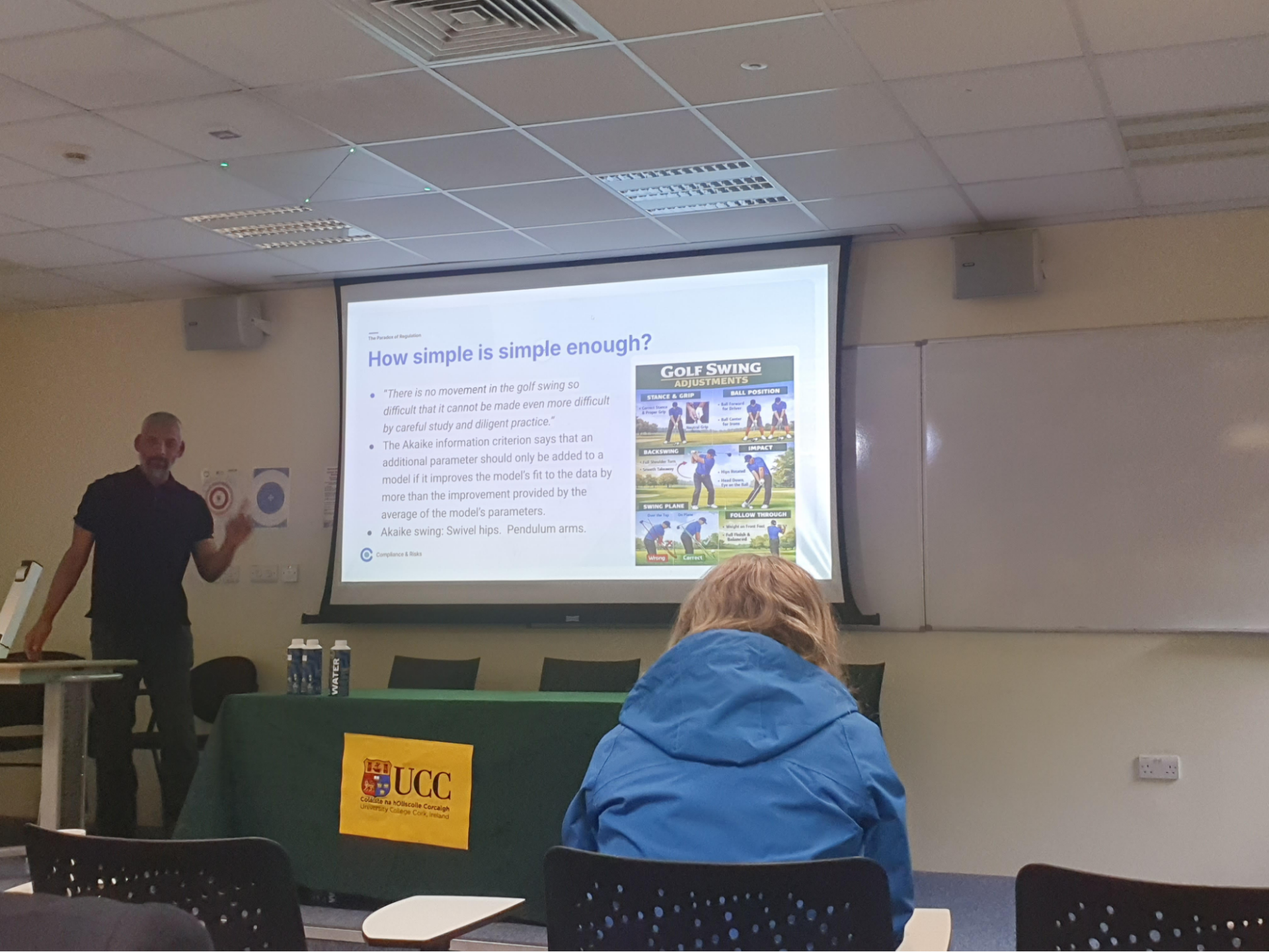
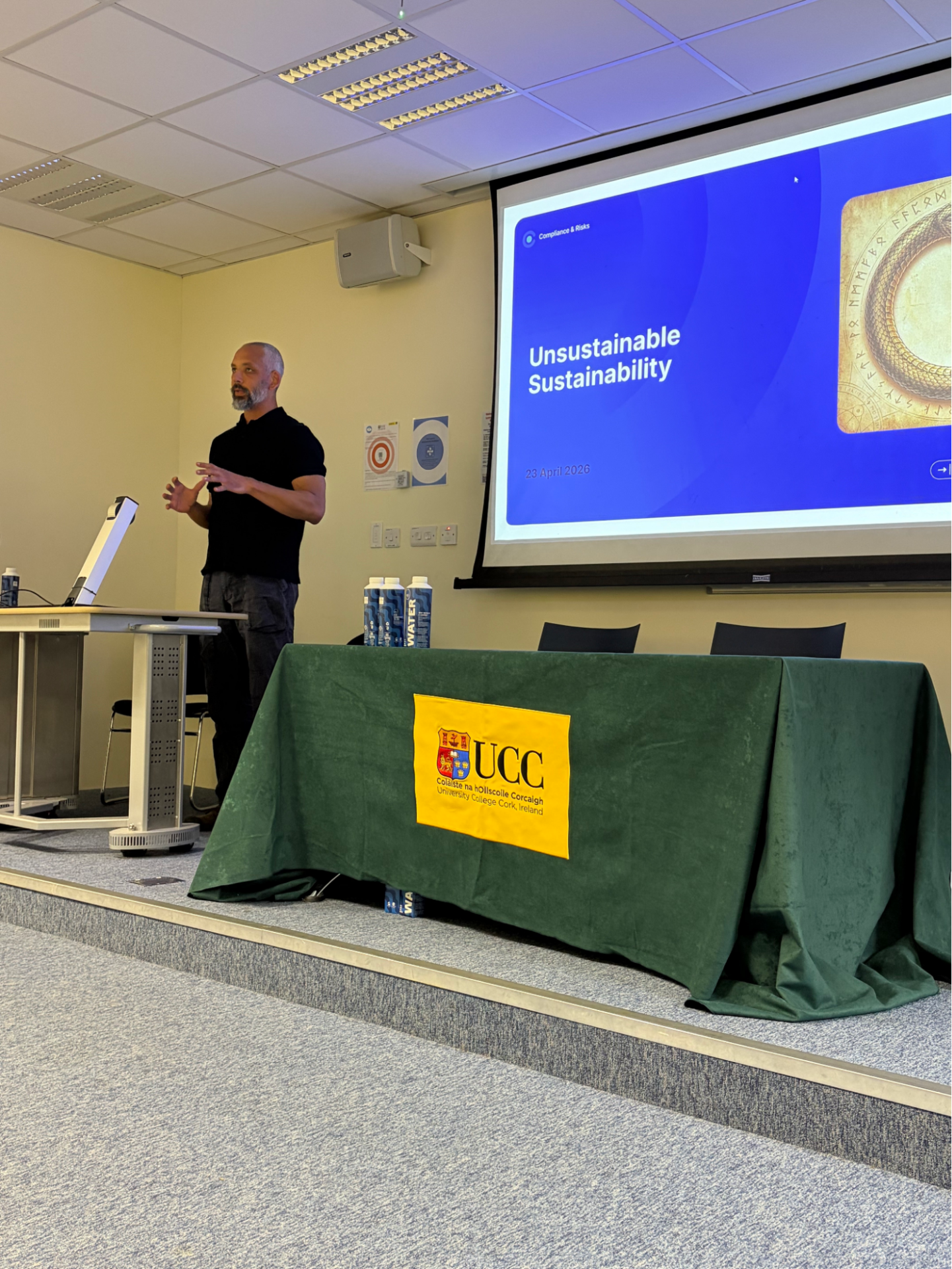
Aaron Green presented “Unsustainable Sustainability”, discussing the political and social backlash against complex and loosely implemented environmental policies. This presentation described the value of parsimony in regulation and provided a framework for regulatory consolidation based on the principle that “everything should be made as simple as possible, but no simpler.” The argument calls for greater emphasis on infrastructure to guide sustainable behaviour as opposed to prescriptive legislation and expensive enforcement mechanisms. A comparison between the US and Dutch approaches to reducing traffic fatalities, shows that well-designed infrastructure allows for simpler regulation with better outcomes than complex legislative prohibitions.
If we view regulations as models for human interaction, we can apply Hirutugu Akaike’s concept of an information criterion to assess the functional requirements for a regulation to work. This framework shows why the present sustainability regulations are politically unsustainable. “Reverse logistics” cannot be regulated as a simple inversion of existing logistical processes. Because logistics is an irreversible, thermodynamic process of distribution, reverse logistics must require its own dedicated infrastructure for regulations to have a desirable impact.
The conference furthermore examined how the EU’s corporate sustainability framework, including the Corporate Sustainability Reporting Directive (CSRD) and the Corporate Sustainability Due Diligence Directive (CSDDD), was rolled back and reduced before its implementation and application had properly commenced.
It was pointed out how this shift might redirect regulatory emphasis toward national laws such as the French Duty of Vigilance and the German Due Diligence in Supply Chain Act. Consequently, the EU’s “simplification” agenda may paradoxically lead to a more fragmented yet more focused environment at the national level.
Moreover, it was noted that enforcement of the French Duty of Vigilance law, long perceived as relatively limited, is now rapidly intensifying as courts have developed specialized judges to handle complex corporate responsibility cases. This trend is already yielding results, as evidenced by the recent La Poste case, which serves as a landmark decision in this area. In its ruling of 17 June 2025, the Paris Court of Appeal upheld a lower court decision that found La Poste’s vigilance plan inadequate. The Court criticized the plan for relying on overly vague risk mapping that failed to address specific supply chain risks, such as the use of undocumented workers by subcontractors. Consequently, the company was ordered to revise its plan with granular, evidence-based assessments and to conduct genuine, collaborative consultations with trade unions regarding its whistleblowing mechanisms.
In addition, the importance of PFAS and recent developments in this area were highlighted, alongside the evolving scientific consensus on their harmful environmental and public health effects. The discussion also examined how courts in the United States, the United Kingdom, and France have addressed PFAS-related issues across sectors and concerns affecting communities living near or working near polluting industries.
Specifically, PFAS have not typically been systematically assessed in Environmental Impact Assessments (EIA). However, as public awareness increases and scientific understanding of PFAS risks continues to develop, there is a growing trend toward incorporating such substances into environmental assessments.
It was further stressed that PFAS assessments must be comprehensive, precise, and conclusive, reflecting an adequate understanding of contamination risks and their potential impacts on affected sites and surrounding environments. From a corporate accountability perspective, incomplete or superficial PFAS assessments may not only undermine regulatory compliance but also expose project approvals to judicial review and the quashing of development consents.
In addition, other presentations focused on enforcement issues and the necessity of National Environmental Audit Bodies, discussed environmental and climate-related rights, including the dilution of mitigation targets and related obligations, as well as ways in which courts and regulatory authorities are increasingly strengthening corporate accountability in relation to human rights and environmental claims, as well as in the context of issues such as greenwashing.
Finally, the conference concluded by analysing the differences between consolidation, codification and integration of environmental law, where narrow, siloed regulatory schemes cannot hope to deal with the problems that emerge in an interconnected environment.
The 22nd Law and the Environment Conference at University College Cork provided a rich, multidisciplinary reflection on the evolving architecture of environmental law. Some presentations focused on recent EU developments, including circular economy frameworks and sustainability-related regulations while others highlighted the growing importance of courts, scientific evidence, and governance infrastructures in shaping environmental outcomes. From corporate vigilance litigation to emerging standards in risk assessments, legal development is increasingly shaped not only by legislative reform but also by enforcement practices and judicial interpretation.

Six months of research, done in 60 seconds. Cut through ESG chaos and act with clarity. Try C&R Sustainability Free.