Navigating Israel’s Emergency Regulations: A Guide for Businesses and Employees
This blog was originally posted on 10th April, 2026. Further regulatory developments may have occurred after publication. To keep up-to-date with the latest compliance news, sign up to our newsletter.
AUTHORED BY JUMANA IGHBARIA HAMAM, REGULATORY COMPLIANCE SPECIALIST, COMPLIANCE & RISKS
Introduction
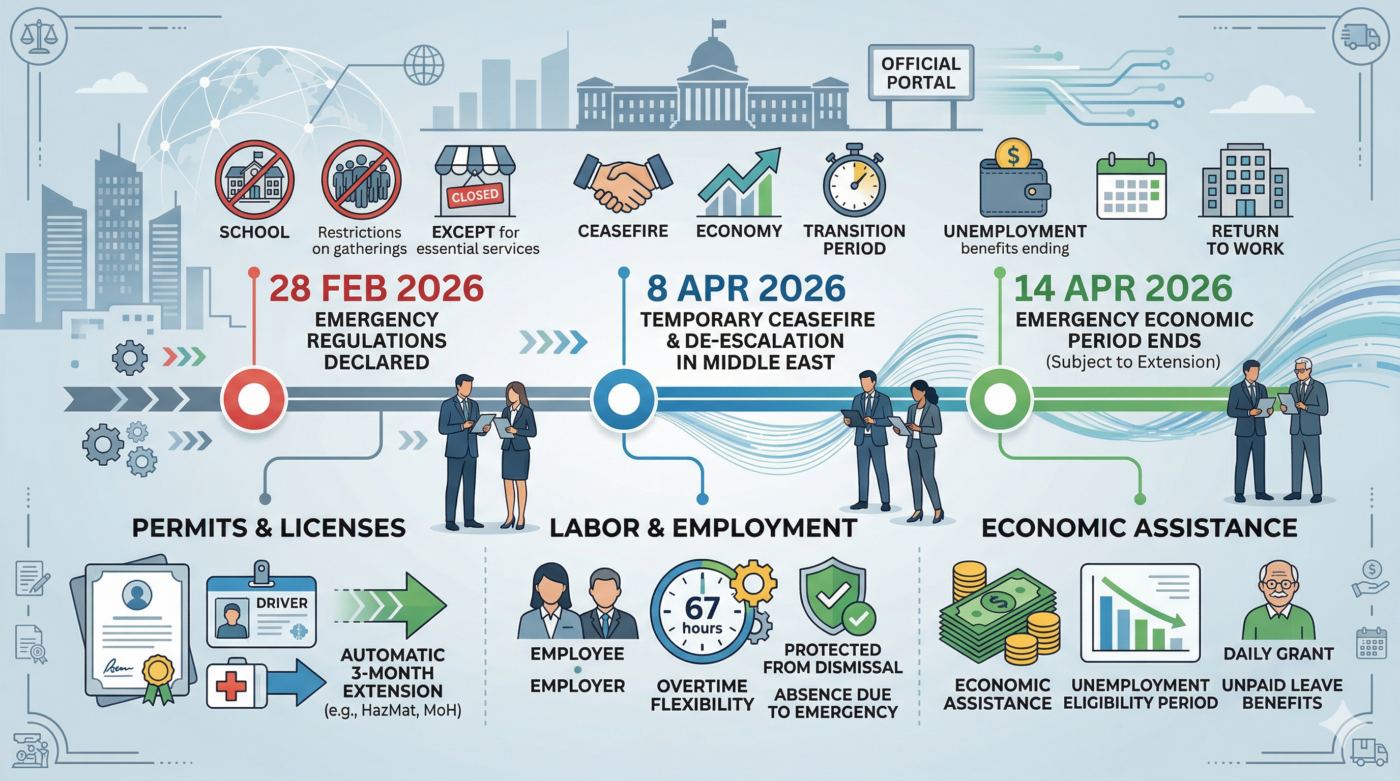
On February 28, 2026, a State of Emergency was declared across the State of Israel following a significant escalation with Iran. This emergency status is currently in effect through April 14, 2026. Consequently, the country transitioned from routine operations to “essential activity only” to prioritize public safety.
With recent declarations of a temporary ceasefire and a relative de-escalation of tensions in the Middle East, it is crucial to stay informed during the transition from the national State of Emergency back to full economic activity.
In this blog, we will highlight the emergency and temporary orders that should be taken into consideration as the Israeli home front prepares to return to regular activity, provided this temporary ceasefire continues.
Emergency Acts in the Last 5 Weeks
The Israeli government has approved several emergency acts in the last 5 weeks to support the workforce and ensure the continuity of essential services.
Safety Security Measures in the Home Front (Since Feb 28, 2026)
- Education: All educational activities and institutions are closed.
- Gatherings: Public events are strictly prohibited or limited to sheltered spaces with a capped number of participants.
- Commerce: Non-essential offices and businesses are closed; only “vital economy” sectors remain operational.
- Civil Defense: The public is advised to remain near protected spaces and strictly follow Home Front Command instructions.
Protection of Workers Law (Amendment No. 6)
This amendment prohibits the dismissal of employees who are absent due to the emergency. Protection applies to:
- Employees evacuating damaged homes (valid for 3 months).
- Parents supervising children while a spouse is in military or emergency service.
- Foster parents managing childcare.
- Note: This amendment is effective retroactively from February 28, 2026.
Overtime Flexibility Act (Temporary Order)
To address labor shortages in essential sectors, employers with more than 20 workers may expand overtime if at least 20% of their staff is absent.
- Max Hours: Up to 67 hours per week.
- Daily Limit: 12-hour workdays (extendable to 14 hours with employee consent and additional breaks).
The Economic Assistance Program
This financial safety net is active through April 14, 2026, and includes:
- Unemployment: Qualifying periods are reduced from 12 months to 6 months.
- Unpaid Leave: Benefits are accessible after only 10 days of unpaid leave.
- Senior Workers: Special daily grants are available for employees aged 67 and older.
- Parental Protection: For those on unpaid leave for 14+ days, the standard 60-day post-maternity dismissal protection is “paused” and will resume only once they return to work.
Hazardous Materials Transport Act
To prevent supply chain disruptions, permits for drivers of hazardous materials expiring in March 2026 are automatically extended for 60 days. This includes additional time to complete mandatory safety training.
Regulatory Deadline Deferral Act
This law establishes a “Second Determining Period” ending May 31, 2026. It allows for the automatic extension of various regulatory permits and postpones deadlines for administrative hearings and financial sanctions.
Ministry of Health Regulatory Guide
Under the Deferral Act, the Ministry of Health has granted a three-month automatic extension for:
- Manufacturer licenses.
- Import permits.
- Medical device registrations (AMAR) expiring through May 2026.
- Note: No application or additional fee is required for these extensions.
Final Thoughts
These measures are subject to extension by the Minister of Finance, the Minister of Labor, or the Government as the security situation evolves. For personalized guidance or in cases of uncertainty, you can visit the recently launched official Israeli government emergency portal for real-time assistance and updates.
Want a 2026 overview of the regulatory landscape across the Middle East? Check out our blog.
Stay Ahead Of Regulatory Changes
Want to stay ahead of the latest regulatory developments?
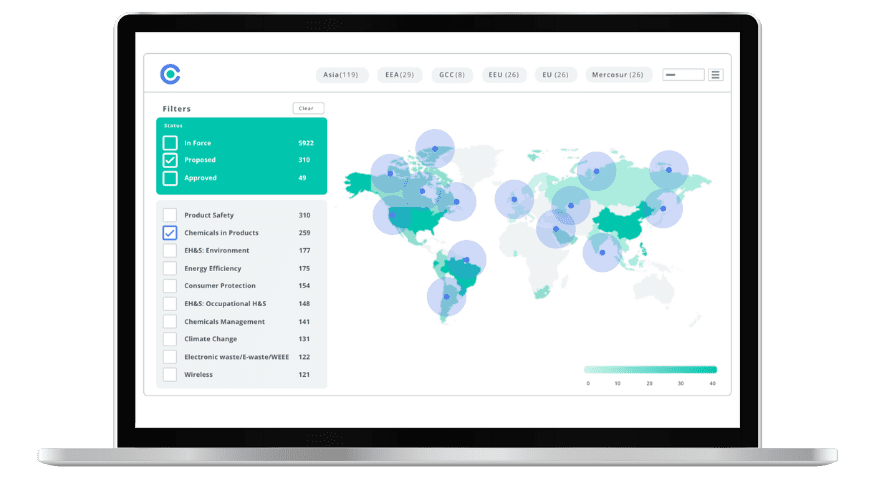
Accelerate your ability to achieve, maintain & expand market access for all products in global markets with C2P, your key to unlocking market access, trusted by more than 300 of the world’s leading brands. C2P is an enterprise SaaS platform providing everything you need in one place to achieve your business objectives by proving compliance in over 195 countries.
C2P is purpose-built to be tailored to your specific needs with comprehensive capabilities that enable enterprise-wide management of regulations, standards, requirements and evidence.
Add-on packages help accelerate market access through use-case-specific solutions, global regulatory content, a global team of subject matter experts and professional services.
- Accelerate time-to-market for products
- Reduce non-compliance risks that impact your ability to meet business goals and cause reputational damage
- Enable business continuity by digitizing your compliance process and building corporate memory
- Improve efficiency and enable your team to focus on business critical initiatives rather than manual tasks
- Save time with access to Compliance & Risks’ extensive Knowledge Partner network
Simplify Corporate Sustainability Compliance
Six months of research, done in 60 seconds. Cut through ESG chaos and act with clarity. Try C&R Sustainability Free.