June 7th, 2023
Watch On Demand

If you’re new to the world of product compliance and its ever-evolving regulatory landscape and would like a practical introduction, you’re in the right place.
In this blog, you will learn about the fundamentals of product compliance, how it impacts manufacturers bringing products to market, and what it means to keep products compliant in 2026 – when regulatory change is faster, broader, and more interconnected than ever.
To launch a product to market, companies must ensure that the product meets all applicable requirements set by governments, parliaments, and regulatory authorities. This process is known as product compliance.
Governments enact laws, regulatory bodies issue regulations to enforce those laws, and standards organizations publish standards that help demonstrate compliance. Manufacturers, importers, and brand owners are ultimately responsible for ensuring their products comply with all applicable requirements.
While safety remains central, product compliance in 2026 goes beyond traditional safety concerns. It also includes:
The objective of product compliance remains the same: to protect consumers, the environment, and communities from harm. However, requirements differ by country and region and increasingly overlap across regulatory domains.
Regulations are legally binding rules that define how laws are implemented and enforced. Their application is mandatory.
Product compliance requires evidence that a product meets essential requirements through regulations, directives, and harmonised or international standards. Effective compliance management helps organizations reduce risk, control costs, and avoid delays to market access.
Examples of key product compliance regulations include:
In recent years, additional regulations affecting connected, digital, and AI-enabled products – such as GDPR, the EU Cyber Resilience Act, and the EU AI Act – have expanded the scope of product compliance further.
Over the past decade, technological advances have significantly expanded the regulatory scope affecting products.
Products once regulated primarily for physical safety or materials compliance are now subject to additional requirements related to:
For example, smart appliances and connected consumer electronics must now comply not only with traditional product safety and chemical regulations but also with data protection and cybersecurity laws.
Since 2016, global regulatory requirements impacting products have increased by more than 80%. As a result, product compliance is under greater scrutiny than ever before, and manufacturers are expected to demonstrate continuous compliance – not just point-in-time conformity.
To understand product compliance, it is important to distinguish it from regulatory compliance more broadly.
Regulatory compliance refers to ensuring that an organization complies with all applicable laws and regulations governing its operations. This includes areas such as:
Product compliance, by contrast, focuses specifically on the product and its components – ensuring that the product meets all applicable requirements so it can be legally placed on and remain on the market.
In simple terms:
“Regulatory compliance applies to the whole organization and its all departments, whereas product compliance represents the manufactured product and its counterparts”
Compliance with product regulations is a legal requirement. Non-compliant products cannot legally be sold and may be subject to fines, market withdrawal, or seizure at customs.
Compliance also supports commercial success. Demonstrating compliance helps protect brand reputation, enables market access, and builds trust with customers, distributors, and regulators.
For example:
Products must be compliant because they directly affect consumer safety.
Examples include:
Product compliance exists to prevent these risks and protect end users.
A company that sells products that violate consumer protection laws or are otherwise considered deceptive, could face fines and criminal charges. In extreme cases, the government may sue them and put them under forced recall. (see figure 3, below)

If a product doesn’t meet the requirements of the law, then the consequences vary depending on the type of violation.
If there is lead found in cosmetics, the business might be fined or the owner even arrested by local authorities. If products don’t comply with regulations like those from the FDA, then they may simply be seized by customs agents when they enter the country. Forced recalls are issued when products are deemed to be non-compliant and unsafe, which essentially means that you need to organize the return of all unsafe products – and offer refunds or replacements.
Here are a few scenarios when your product may be subject to recall:
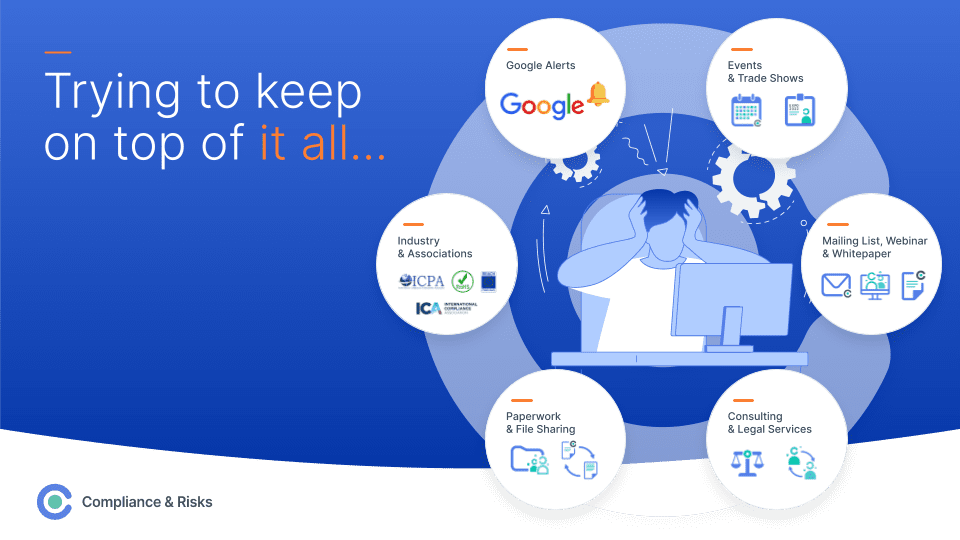
With the continued growth in global regulatory requirements and increased enforcement activity, staying on top of regulatory change has become a significant challenge.
Compliance teams must track:
Relying on manual processes, spreadsheets, or disconnected tools makes this increasingly difficult to scale – especially as new areas such as cybersecurity, AI, and sustainability add further complexity.
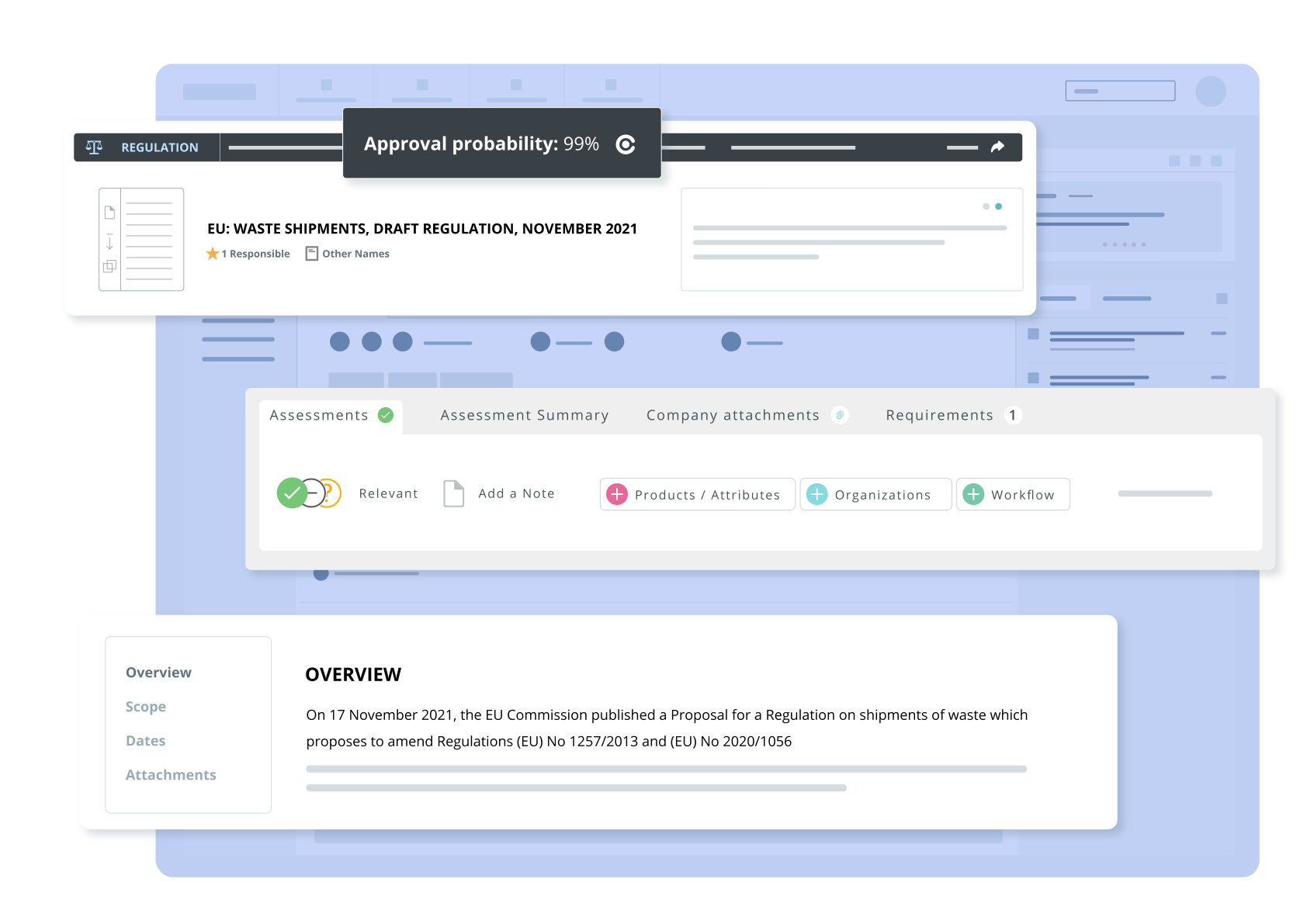
Compliance & Risks has developed an innovative technology platform, called C2P, that helps the world’s leading brands comply with global regulatory changes. C2P helps compliance teams accelerate their ability to achieve, maintain and expand market access for all their products in international markets.
C2P is purpose-built to be tailored to a company’s specific needs with comprehensive capabilities that enable enterprise-wide management of regulations, standards, requirements and evidence. Add-on packages help accelerate market access through use-case-specific solutions, global regulatory content, a global team of subject matter experts and professional services.

There are 5 key areas that C2P Product Compliance Solution helps companies with:
C2P serves as a single source of compliance information for the teams and helps in driving a ‘zero surprises’ compliance policy for the business.

While the fundamentals of product compliance remain rooted in safety and legal conformity, the scope and complexity of compliance in 2026 are far greater than in the past. Manufacturers must now manage overlapping regulatory requirements across safety, chemicals, digital technologies, cybersecurity, and sustainability.
Organizations that adopt structured, scalable approaches to product compliance are better positioned to protect consumers, maintain market access, and respond effectively to regulatory change.
Product compliance is the process of ensuring that a product meets all applicable legal, regulatory, and standards-based requirements before it is placed on the market and throughout its lifecycle. This includes safety, materials, labeling, environmental, digital, and software-related obligations.
No. Regulatory compliance applies to an organization’s overall operations, such as workplace safety or emissions. Product compliance applies specifically to the product itself and determines whether it can legally be sold or remain on the market.
Product compliance is legally required to access markets. Non-compliant products can be blocked from sale, seized, recalled, or fined. Compliance also protects consumers, brand reputation, and long-term revenue.
Product compliance regulations may include:
The exact requirements depend on the product type and market.
Product compliance has expanded beyond traditional safety requirements. Connected, digital, and AI-enabled products are now subject to cybersecurity, data protection, and software governance regulations, increasing compliance complexity.
Non-compliance can result in:
Yes. In many jurisdictions, market surveillance authorities can request compliance evidence at any time. Failure to provide required documentation may result in enforcement actions or recalls.
Leading companies use centralized compliance systems to:
Manual tracking methods are increasingly difficult to scale.
Yes. Product compliance is ongoing. Companies must monitor regulatory changes, maintain documentation, and ensure continued compliance throughout the product’s time on the market.
C2P helps organizations identify applicable regulations, interpret requirements, manage compliance evidence, and monitor regulatory change globally—supporting continuous compliance across product lifecycles.