Creating a Global Compliance Governance Framework
THIS BLOG WAS WRITTEN BY THE COMPLIANCE & RISKS MARKETING TEAM TO INFORM AND ENGAGE. HOWEVER, COMPLEX REGULATORY QUESTIONS REQUIRE SPECIALIST KNOWLEDGE. TO GET ACCURATE, EXPERT ANSWERS, PLEASE CLICK “ASK AN EXPERT.”
You know that feeling. It’s a Monday morning, you open your inbox, and there it is: an alert about a new regulation in a key market. Another one. Your heart sinks a little. It feels less like a strategic update and more like another log on an already raging fire.
If you’re a compliance leader, that feeling is all too familiar. And you’re not alone. Gartner research found that a staggering 69% of compliance leaders are struggling with the sheer volume and velocity of regulatory change. It’s a constant, overwhelming flood.
For years, the answer was to build a bigger binder. To write more policies, hire more lawyers, and create more checklists. But that approach is failing. It’s reactive, siloed, and it treats compliance as a cost center – a box to be ticked – rather than a strategic advantage. Let’s be honest, how many of those binders are just gathering dust on a shelf?
This article is for leaders who know there has to be a better way. We’re going to move beyond the binder and lay out a practical blueprint for building a global compliance governance framework that doesn’t just manage risk, but drives business value. This is about creating a living, breathing system that embeds integrity into the DNA of your organization.
Table of Contents
- Why Your Current Compliance Model Is Probably Broken
- The Anatomy of a Modern Governance Framework
- Putting the Framework into Action: From Theory to Reality
- Key Takeaways: Building Your Framework
- Frequently Asked Questions
- Ready to Build a Framework That Works?
Why Your Current Compliance Model Is Probably Broken
The fundamental problem with traditional compliance is a massive perception gap. What the C-suite sees and what employees on the ground experience are often two different worlds.
Think about it this way. CEOs are rightly concerned. A recent KPMG Global CEO Outlook cited regulatory risk as one of their top three concerns. They know it’s important. But that concern isn’t always translating into effective oversight.
A revealing Deloitte report found that 45% of boards spend less than a single day per year on compliance oversight. Less than one day. That’s not a strategic priority; it’s a footnote on an agenda.
And the downstream effect of this is disastrous for creating a genuine culture of integrity. The EY Global Integrity Report discovered that a mere 21% of employees believe their board members have a strong grasp of the compliance risks the business actually faces. Worse, 38% of employees feel their company’s official code of conduct has little impact on how people actually behave.
Here’s what that data is really telling us: Your beautifully crafted code of conduct, your annual training modules, your detailed policies – they mean very little if they aren’t reinforced by a visible, engaged leadership and a structure that holds everyone accountable. Without a proper governance framework, compliance becomes a hollow exercise. It’s just a binder on a shelf.
The Anatomy of a Modern Governance Framework
So, what does a framework that actually works look like? It’s not just a department; it’s a system. A structure that connects the boardroom to the front lines. It’s built on four key pillars.
Board-Level Oversight: Moving from Spectator to Strategist
Effective governance starts at the very top. A board that spends less than a day a year on compliance is simply not doing its job. It’s time to move them from a passive, spectator role into an active, strategic one.
What does that look like in practice?
- A Dedicated Committee: This could be an audit committee with an expanded mandate or a separate risk and compliance committee. The key is to have a dedicated forum with the right expertise to ask tough questions.
- A Clear Risk Appetite Statement: The board must define and articulate the level of regulatory risk the organization is willing to accept. This isn’t about eliminating all risk—it’s about making conscious, informed decisions.
- Meaningful Reporting: Forget 100-page reports filled with legalese. The board needs a concise, data-driven dashboard that clearly shows key risk indicators (KRIs), incident trends, and the status of remediation efforts. They need to understand the story, not just see the numbers.
When the board is actively engaged, it sends a powerful message throughout the entire organization: this matters.
The Cross-Functional Compliance Council: Your Nerve Center
While the board sets the strategy, the compliance council is the operational nerve center. This is where the real work of managing compliance happens day-to-day.
Too often, compliance is siloed within the legal department. But regulations don’t care about your org chart. A new environmental standard can impact product design, supply chain, marketing, and finance all at once. That’s why a cross-functional approach is non-negotiable.
PwC research shows a trend toward hybrid models, with 72% of organizations having a centralized compliance function and 59% also embedding compliance responsibilities directly into business units. A compliance council is the perfect way to formalize this hybrid structure.
Your council should include leaders from:
- Legal & Compliance
- Product Development & Engineering
- Operations & Supply Chain
- Human Resources
- IT & Cybersecurity
- Finance & Internal Audit
- Marketing & Sales
This group’s mandate is to assess new regulations, determine their business impact, assign ownership for action items, and monitor progress. They are the translators, turning complex legal requirements into concrete business actions.
Accountability Models: The “Three Lines of Defense,” Reimagined
You’ve probably heard of the “Three Lines of Defense” model. It’s a classic for a reason, but it’s often implemented poorly, creating more silos than it solves.
- First Line: The business units themselves. They own the risk because they create it.
- Second Line: Risk management and compliance functions. They provide oversight, expertise, and frameworks.
- Third Line: Internal Audit. They provide independent assurance that the first two lines are working effectively.
The problem is that these lines can become walls. The business throws things over the wall to compliance, who then gets audited by the third line. It’s adversarial and inefficient.
A modern framework reimagines these as interconnected, collaborative loops. The second line (Compliance) doesn’t just police the first line (Business); it enables them. They provide the tools, data, and insights – like those needed for proactive compliance processes – that make it easy for business units to own their compliance responsibilities. The goal is shared ownership, not finger-pointing.
Escalation Protocols: Creating Clear Paths for Critical Issues
When something goes wrong – a product fails a safety test, a data breach occurs, a whistleblower comes forward – the worst thing you can have is ambiguity. Who needs to know? When do they need to know it? Who has the authority to make a decision?
A robust escalation protocol answers these questions before a crisis hits. It defines clear triggers and pathways for raising critical issues from the operational level right up to the compliance council and, if necessary, the board.
This isn’t about creating bureaucracy. It’s about creating clarity and speed. A well-defined protocol ensures that the right people get the right information at the right time to make a defensible decision, protecting both the company and its leaders.
Putting the Framework into Action: From Theory to Reality
A framework on paper is still just a binder. The magic happens when you bring it to life with the right processes, culture, and technology.
Let’s go back to that Gartner statistic: 69% of leaders are overwhelmed by the pace of change. You cannot manually track tens of thousands of regulations across hundreds of jurisdictions. It’s impossible. This is where technology becomes the great enabler.
A modern framework relies on a centralized platform to act as a single source of truth. Think about it:
- Horizon Scanning: AI-powered tools automatically monitor global regulatory bodies, flagging upcoming changes that impact your specific products and markets.
- Impact Analysis: The system helps you quickly assess what a new rule means for your business, connecting the regulation to specific products, components, and suppliers.
- Workflow & Task Management: The compliance council can use the platform to assign ownership, track remediation tasks, and create an audit-ready trail of evidence.
- Reporting & Analytics: Instead of manually building reports, you can generate real-time dashboards for the board and other stakeholders with the click of a button.
This isn’t just about efficiency; it’s about effectiveness. Technology transforms compliance from a reactive, manual slog into a proactive, data-driven strategic function. It provides the intelligence needed for managing the ever-evolving global regulatory landscape, including complex areas like ESG compliance.
Ultimately, this all supports the most crucial element: culture. When employees see a transparent, consistent, and well-supported system in action, they start to believe in it. And a strong compliance culture isn’t just a “nice to have.” Deloitte found that 91% of companies believe a strong culture of compliance directly improves financial performance. It builds trust with customers, attracts top talent, and creates a more resilient, sustainable business.
Key Takeaways: Building Your Framework
For those who skim (we see you), here’s the bottom line.
What is a global compliance governance framework?
- It’s an enterprise-wide system that connects board-level oversight with on-the-ground operations. It establishes clear roles, responsibilities, and protocols for managing regulatory risk across all jurisdictions. It’s more than a department; it’s a strategic infrastructure.
What are the key components?
- Engaged Board Oversight: A dedicated committee that sets the tone and risk appetite.
- Cross-Functional Council: A nerve center with leaders from across the business to operationalize compliance.
- Clear Accountability: A collaborative model (like the “Three Lines”) where everyone knows their role.
- Defined Escalation Paths: A clear process for handling critical issues before they become crises.
Why is this so important?
- Because the old “binder on a shelf” model is broken. In a world of constant regulatory change, a proactive, integrated framework is the only way to mitigate risk effectively, build a culture of integrity, and turn compliance into a competitive advantage that improves financial performance.
Frequently Asked Questions
- Q: Our company is unique. Will a standardized framework even work for us?
That’s a great question, and the answer is that a good framework is never one-size-fits-all. The principles we’ve discussed – board oversight, cross-functional collaboration, clear accountability – are universal. But how you implement them must be tailored to your industry, size, geographic footprint, and corporate culture. The goal isn’t to copy-paste a template; it’s to use these pillars as a blueprint to build a structure that fits your specific business. - Q: We already have a compliance department. Isn’t that enough?
A department is a group of people. A governance framework is the system in which they, and the entire organization, operate. Your compliance department is a critical part of the framework (typically the “second line”), but they can’t be effective in a vacuum. Without board engagement, buy-in from business units, and clear processes, even the best compliance team will be fighting an uphill battle. The framework connects them to the rest of the business and gives them the authority and resources they need to succeed. - Q: How do we get buy-in from senior leadership for something like this?
You need to speak their language. Don’t frame it as a compliance initiative; frame it as a business-critical strategy. Use the data: “Regulatory risk is a top-three concern for our CEO peers” (KPMG); “A strong compliance culture is believed by 91% of companies to improve financial performance” (Deloitte); “Ineffective oversight creates a massive gap between leadership perception and employee reality, which erodes trust and creates hidden risks” (EY). This isn’t about avoiding fines. It’s about building a more resilient, reputable, and profitable company. - Q: This sounds expensive and time-consuming to implement.
The real question is, what is the cost of not implementing it? Consider the cost of a major product recall, a multi-million dollar fine, reputational damage from an ethical lapse, or being locked out of a key market due to non-compliance. A modern, tech-enabled framework is an investment, not a cost. It creates efficiencies, reduces manual labor, and, most importantly, protects the long-term value of the enterprise.
Ready to Build a Framework That Works?
Moving beyond the binder is a big step, but it’s the only way forward in today’s complex world. Building a robust global compliance governance framework transforms your approach from reactive and defensive to proactive and strategic. It’s the foundation for sustainable growth.
If you’re ready to stop fighting fires and start building a resilient, audit-ready compliance infrastructure, we can help.
Explore the C2P Platform to see how technology can power your global governance framework.
Experience the Future of ESG Compliance
The Compliance & Risks Sustainability Platform is available now with a 30-day free trial. Experience firsthand how AI-driven, human-verified intelligence transforms regulatory complexity into strategic clarity.
👉 Start your free trial today and see how your team can lead the future of ESG compliance.
The future of compliance is predictive, verifiable, and strategic. The only question is: Will you be leading it, or catching up to it?
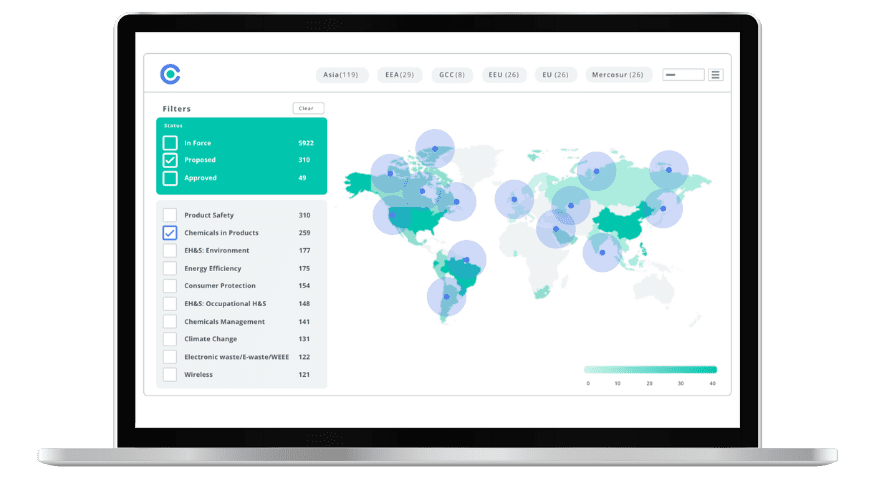
Six Months of Research, Done in 60 Seconds
Cut through ESG chaos and act with clarity. Try C&R Sustainability Free.