The Unavoidable Truth: Why Corporate Accountability for Human Rights Violations Is No Longer Optional
THIS BLOG WAS WRITTEN BY THE COMPLIANCE & RISKS MARKETING TEAM TO INFORM AND ENGAGE. HOWEVER, COMPLEX REGULATORY QUESTIONS REQUIRE SPECIALIST KNOWLEDGE. TO GET ACCURATE, EXPERT ANSWERS, PLEASE CLICK “ASK AN EXPERT.”
Remember a time when corporate social responsibility was mostly a public relations exercise? A few well-placed statements, maybe a charity drive, and you were good. Honestly, those days are long gone. The regulatory net is tightening, and the stakes for businesses – especially those with complex global supply chains – have never been higher.
Today, corporate accountability for human rights violations isn’t just about ethics; it’s about hard legal liability, financial penalties, and a reputation that can be shattered overnight. We’re talking about a fundamental shift from voluntary guidelines to enforceable legal obligations, particularly in the U.S. and Europe. Companies are now being held legally responsible not just for their own direct actions, but also for the actions of their suppliers, deep within their value chains. This isn’t theoretical; it’s playing out in courts around the world, making proactive risk prevention protocols an absolute necessity.
Your brand, your reputation, your bottom line – all are increasingly tied to the human rights performance of every link in your supply chain. If you’re a decision-maker comparing compliance solutions, evaluating risks, and seeking to build confidence in your strategy, you’re in the right place. This isn’t just a legal brief; it’s a practical guide to understanding, mitigating, and ultimately, leveraging robust human rights due diligence to your strategic advantage.
Table of Contents
- The Evolving Landscape of Corporate Human Rights Liability
- Navigating the Global Regulatory Maze: A Comparative Guide
- Implementing Robust Human Rights Due Diligence (HRDD) in Your Supply Chain
- The Cost of Inaction: Risks & Reputational Damage
- Strategic Advantages: Why Proactive HRDD Builds Value
- The Future of Corporate Accountability: What’s Next?
- Key Takeaways for Decision-Makers
- Frequently Asked Questions (FAQs)
- Your Next Steps
- Sources
The Evolving Landscape of Corporate Human Rights Liability
The world has changed. Customers, investors, and regulators are no longer content with vague assurances. They demand concrete evidence that companies are respecting human rights throughout their operations. More than 90 percent of the world’s 2,000 most influential companies are failing to meet societal expectations towards human rights, working conditions, and corporate ethics, according to a 2024 assessment by the World Benchmarking Alliance (1). This isn’t just bad press; it’s leading to tangible legal consequences.
From Voluntary Frameworks to Binding Laws
For decades, the United Nations Guiding Principles on Business and Human Rights (UNGPs) provided the authoritative framework for corporate responsibility. They were, however, precisely that: guiding principles. Voluntary. Best practice. While invaluable for establishing norms, they lacked enforcement teeth.
But now, countries and blocs, notably the European Union, are codifying these principles into binding legislation. This shift marks a profound transformation in how businesses must operate globally. It means that what was once a moral imperative is rapidly becoming a legal one, backed by fines, injunctions, and even criminal charges.
Key Legal Doctrines Simplified: Parent Company Liability, Vicarious Liability, and Extraterritorial Jurisdiction
Understanding the legal underpinnings of this shift is crucial. Here’s what they mean for your business:
- Parent Company Liability: This doctrine allows a parent company to be held responsible for the actions of its subsidiaries, even if those subsidiaries operate in different countries. Courts are increasingly scrutinizing the level of control and influence a parent company exercises over its foreign operations or suppliers. If a parent company has direct knowledge, provides guidance, or exerts operational control that contributes to human rights violations by a subsidiary or supplier, they can be held liable. This is a critical area of focus, particularly in jurisdictions like the UK and Canada.
- Vicarious Liability: Generally, vicarious liability holds one party responsible for the wrongful acts of another due to a specific relationship (e.g., employer-employee). In the context of global supply chains, courts are exploring whether a company can be held vicariously liable for the actions of its suppliers or contractors if there’s sufficient operational integration or reliance, effectively treating them as part of the company’s extended enterprise.
- Extraterritorial Jurisdiction: This refers to the power of a country’s courts to apply its laws beyond its national borders. This is a game-changer. Historically, suing a company in its home country for abuses committed abroad was incredibly challenging. However, recent legal trends, especially in Europe, are expanding the reach of national courts. Companies can now face litigation in their home jurisdictions for human rights violations occurring anywhere in their global supply chain, meaning that activities in a developing nation could lead to legal action in Brussels, London, or Berlin.
These doctrines collectively create a powerful legal framework that demands companies not only monitor but actively prevent human rights abuses across their entire global footprint.
Landmark Cases, Explained: Lessons from the Courts
Judicial precedents are the bedrock of this evolving landscape. They provide concrete examples of how these doctrines are being applied, offering invaluable – and sometimes stark – lessons for businesses.
Vedanta Resources Plc v. Lungowe (UK, 2019): This landmark UK Supreme Court case allowed Zambian villagers to sue UK-headquartered mining company Vedanta in English courts for alleged environmental damage and human rights abuses by its Zambian subsidiary. The ruling reinforced the concept of parent company liability based on the degree of control and public assurances made by the parent.
Lesson: A parent company cannot hide behind the corporate veil of a foreign subsidiary, especially if it exercises operational control or supervision over that subsidiary. Public ESG statements can create a “duty of care.”
Okpabi v. Royal Dutch Shell Plc (UK, 2021): Another pivotal UK Supreme Court decision, this case allowed Nigerian claimants to sue Royal Dutch Shell in the UK for alleged oil spill damage caused by its Nigerian subsidiary. The court found that there was a “real prospect” of establishing a duty of care owed by the parent company.
Lesson: Parent companies can owe a direct duty of care to those affected by their foreign subsidiaries’ operations, particularly when the parent has significant control or influence over the subsidiary’s operational policies.
Nevsun Resources Ltd. v. Araya (Canada, 2020): This Canadian Supreme Court case permitted former Eritrean workers to sue a Canadian mining company in Canada for alleged forced labor and human rights abuses at its Eritrean mine. Importantly, it allowed claims based on customary international law.
Lesson: Canadian companies can be sued in Canada for human rights abuses committed abroad, even if those abuses fall under customary international law, not just Canadian statutory law.
Lafarge (France, 2024-2026): French cement giant Lafarge faces unprecedented criminal charges for its activities in Syria. In October 2024, French investigating judges ordered Lafarge and four former executives to face trial in a French criminal court for financing a terrorist organisation and violating an embargo (2). The trial took place from November 4 to December 16, 2025, at the Paris Criminal Court, while the investigation into complicity in crimes against humanity continues. The verdict is expected to be delivered on April 13, 2026 (3). Lafarge is the first company in the world to ever face a charge of complicity in crimes against humanity. In the United States, the company and its Syrian subsidiary were fined $788 million in 2022 after pleading guilty to conspiring to provide material support to terrorist groups, including the Islamic State (4).
Lesson: Extreme cases of corporate complicity in severe abuses can lead to criminal prosecution and multi-billion dollar penalties, underscoring the need for rigorous due diligence in conflict zones.
Chiquita Brands International (US, 2024): In June 2024, a federal jury in Florida found Chiquita Brands International liable for financing a Colombian paramilitary group and awarded plaintiffs $38.3 million in damages for the deaths of eight Colombian men murdered by the AUC (Autodefensas Unidas de Colombia) (5). In October 2024, the presiding judge rejected Chiquita’s motion to reduce the jury award to approximately $50,000 for each plaintiff, and entered judgment against Chiquita (6). This historic ruling marked the first time an American jury has held a major U.S. corporation liable for complicity in serious human rights abuses in another country. Approximately half the remaining claims have been settled, though at much lower amounts than the jury verdict awarded individual plaintiffs (7).
Lesson: Corporate payments to armed groups, even under duress, can lead to severe legal and financial repercussions, highlighting the complex ethical and legal tightrope companies walk in volatile regions.
These cases are not isolated incidents; they represent a clear judicial trend towards expanding corporate liability for human rights violations across borders.
Navigating the Global Regulatory Maze: A Comparative Guide
For multinational corporations, the challenge isn’t just if they’re accountable, but where and how. The regulatory landscape is a patchwork of national and regional laws, each with its own scope, requirements, and penalties.
Deep Dive into Key Legislations
Understanding the specifics is crucial for crafting an effective global compliance strategy.
EU Corporate Sustainability Due Diligence Directive (CSDDD) & Corporate Sustainability Reporting Directive (CSRD)
CSDDD (In Force, as Amended by Omnibus I): The CSDDD (Directive 2024/1760) entered into force on July 25, 2024 (8), establishing legal accountability for businesses concerning environmental and human rights transgressions throughout their global value chains. However, in December 2025, the European Parliament approved the Omnibus I deregulation package, which significantly narrowed the directive’s scope and changed how due diligence works (9).
Key changes under Omnibus I include:
- Dramatically reduced scope: The revised CSDDD applies only to companies with more than 5,000 employees and €1.5 billion net turnover—reducing the scope by approximately 70% (10).
- Compliance timeline pushed back: Member States must transpose the directive into national law by July 26, 2028, with company compliance required by July 26, 2029 (11).
- Climate transition plans removed: Mandatory climate transition plans have been removed from the CSDDD entirely (12).
- Harmonized civil liability deleted: The EU-wide harmonized civil liability norm has been removed, with enforcement regimes to be defined at the national level (13).
- Fines capped: Member States will be required to limit the maximum fine to 3% of a company’s global turnover (14).
- Risk-based due diligence approach: Companies can focus on the areas of their chains of activities where actual and potential adverse impacts are most likely to occur, rather than conducting comprehensive mapping exercises (15).
Despite the compromises, the CSDDD survives with core elements intact, including establishing a legal duty for large companies to respect human rights and the environment throughout their global value chains, requiring companies to identify, prevent, stop, and remediate harm, and obligating Member States to ensure full compensation for victims when companies are found civilly liable (16).
CSRD (In Force, as Amended): The CSRD significantly expands mandatory sustainability reporting. However, under the Omnibus I package, the scope has been substantially reduced. The most significant change is the increase in eligibility thresholds, reducing the number of companies subject to the obligations by approximately 80% (17). Under the revised framework, CSRD reporting will apply only to EU companies with more than 1,000 employees and more than €450 million in net annual turnover (18).
US Legislation
Uyghur Forced Labor Prevention Act (UFLPA): This 2021 law creates a rebuttable presumption that all goods manufactured wholly or in part in China’s Xinjiang Uyghur Autonomous Region are made with forced labor and thus prohibited from entering the U.S. unless clear and convincing evidence proves otherwise. Enforcement has been substantial: as of August 2025, CBP has detained 16,755 shipments – valued at nearly $3.7 billion – that it suspects may violate the UFLPA (19). The interagency Forced Labor Enforcement Task Force (FLETF) has added 144 entities to the UFLPA Entity List in the law’s first three years (20).
Recent enforcement actions include adding aluminum, seafood, and polyvinyl chloride to the priority list in July 2024, and banning textile supplier Esquel Group (November 2024), Huafu Fashion, and subsidiaries of Zijin Mining (January 2025) from importing into the United States (21). However, enforcement has shown concerning fluctuations – in July 2025, CBP only stopped 14 shipments, an unprecedentedly low number that raises questions about the agency’s current ability to prioritize enforcement (22).
California Transparency in Supply Chains Act (CTISCA): This 2010 law requires large retailers and manufacturers doing business in California to disclose their efforts to eradicate slavery and human trafficking from their direct supply chains.
Alien Tort Statute (ATCA) Limitations: While historically significant, Supreme Court rulings like Kiobel v. Royal Dutch Petroleum Co. (2013) and Jesner v. Arab Bank, PLC (2018) have significantly limited the application of ATCA to cases with strong connections to U.S. territory.
UK Modern Slavery Act (UK MSA)
Requires commercial organizations operating in the UK with a turnover of £36 million or more to publish an annual modern slavery statement. In March 2025, the UK Government published updated statutory guidance for businesses on their supply chain obligations, providing more detailed recommendations to help organisations comply with Section 54 of the Modern Slavery Act 2015 (23). The updated guidance introduces a new section on “General Principles for Undertaking Anti-Slavery Activities,” signaling a broader strategic shift beyond mere compliance towards meaningful action and continuous improvement (24).
As of June 2025, the UK’s modern slavery statement registry includes over 60,000 statements (25). In October 2025, the Government acknowledged the seriousness of forced labour and indicated that it will review a range of measures to strengthen Section 54, including reporting rules, turnover thresholds, enforcement penalties, and extending its scope to public bodies (26).
Germany Supply Chain Due Diligence Act (LkSG)
The German Supply Chain Due Diligence Act came into force in January 2023 for companies with 3,000+ employees and expanded to companies with 1,000+ employees in 2024. However, significant changes have occurred:
As of October 1, 2025, the external reporting obligations under the law have been abolished immediately and retroactively. Germany’s Federal Office for Economic Affairs and Export Control (BAFA) ceased reviewing corporate due diligence compliance reports (27). The German federal cabinet approved an amendment on September 3, 2025 to abolish the Act’s annual reporting obligation and to ease sanctionable omissions (28), though this has not yet been approved by the German Parliament as of February 2026.
In April 2025, the German government announced their intention to replace the LkSG with the requirements of the CSDDD once these requirements have been finalized under the Omnibus Proposals. This means that businesses in scope no longer have to report under the LkSG; however, core due diligence requirements continue as German authorities may still investigate and sanction severe human rights violations in German companies’ supply chains (29).
In the Coalition Agreement for the current legislative period, the German Government agreed that the Act stays in place until its replacement by a law on international corporate social responsibility implementing the CSDDD “in a low-bureaucracy way that is easy to enforce” (30).
Norway Transparency Act (Åpenhetsloven)
Effective since 2022, requires larger companies operating in Norway to conduct human rights and decent working conditions due diligence and to publicly report on these efforts. It also grants individuals the right to request information about a company’s human rights performance.
EU Forced Labour Regulation (NEW)
A critical new addition to the regulatory landscape: the EU Forced Labour Regulation (Regulation 2024/3015) was published on December 12, 2024 and entered into force on December 13, 2024 (31). The regulation prohibits products made with forced labour from being placed on or exported from the EU market and will fully apply from December 14, 2027 (32).
Key features include:
- Universal application: The prohibition applies to all products sold in the EU, including their components, regardless of geographic origin or industry (33).
- Risk-based enforcement: The Commission and competent authorities take a risk-based approach to investigations, focusing on high-risk sectors, products, and regions (34).
- Member State designation: EU countries must designate competent authorities by December 14, 2025 (35).
- Commission-led external investigations: The Commission leads investigations when forced labour occurs outside the EU, while national competent authorities handle cases within the EU (36).
The regulation complements the CSDDD and aligns with the definition of “forced labour” under International Labour Organization conventions (37).
Emerging Laws
Other countries including Chile, South Korea, and Thailand are also exploring or implementing similar legislation, adding to the complexity.
Jurisdictional Nuances and the Fragmentation Challenge
The sheer volume and variety of these laws create a “fragmentation challenge” for multinational corporations:
- Differing Scopes: Some laws focus on specific issues (e.g., forced labor), others on broader human rights and environmental impacts.
- Varying Applicability Thresholds: Company size, turnover, and operational presence dictate which laws apply – and these thresholds have shifted significantly with the EU Omnibus package.
- Enforcement & Penalties: Fines vary, and some laws carry criminal liability.
- Due Diligence Depth: While many laws align with the UNGPs’ six steps, the required depth and evidence can differ.
Navigating this requires a comprehensive, integrated approach. You can’t just react to individual laws; you need a system that can manage diverse requirements and ensure overarching compliance.
Implementing Robust Human Rights Due Diligence (HRDD) in Your Supply Chain
So, what does it actually mean to implement HRDD? It’s more than just a policy document. It’s an ongoing, dynamic process of identifying, preventing, mitigating, and accounting for human rights impacts. The challenges are real: limited supply chain visibility, resource constraints, traceability issues, and regulatory uncertainty are common hurdles. But ignoring them is no longer an option.
The 6-Step HRDD Framework: Your Actionable Guide
Inspired by the UNGPs, this framework provides a practical roadmap for embedding human rights due diligence into your operations:
1. Policy Commitment
- How-to: Start at the top. Your board and senior leadership must unequivocally commit to respecting human rights. This isn’t just a mission statement; it’s a publicly available human rights policy that’s integrated into your company’s core values and governance structures.
- Why it matters: It sets the tone, allocates resources, and signals to all stakeholders—internal and external—that human rights are a priority.
2. Risk & Impact Assessment
- How-to: Systematically identify actual and potential human rights risks across your entire value chain. Under the revised CSDDD, companies carry out a scoping exercise (based solely on reasonably available information) to identify general areas where adverse impacts are most likely and most severe, then perform in-depth assessment focused on those priority areas (38).
- Deep-tier supply chain mapping: Go beyond Tier 1. Use tools and data to map upstream suppliers, identifying high-risk areas based on country, commodity (e.g., cobalt, palm oil, textiles), and labor type.
- Focus on severe impacts: Prioritize risks that are most severe, widespread, and irremediable. Engage with affected stakeholders and credible third-party experts.
- Why it matters: You can’t mitigate what you don’t know. This step provides the intelligence needed to focus your efforts.
3. Integration & Action
- How-to: Embed human rights considerations into your core business processes.
- Procurement: Integrate human rights clauses into supplier contracts. Make compliance a non-negotiable condition.
- Training: Educate relevant employees (procurement, legal, sustainability, risk) on human rights risks and your company’s policies.
- Influence: Leverage your buying power and relationships to encourage suppliers to improve their practices.
- Why it matters: Policies are useless if they don’t translate into daily operations.
4. Tracking & Monitoring
- How-to: Continuously monitor the effectiveness of your HRDD processes.
- KPIs: Define measurable key performance indicators (e.g., number of supplier audits, grievance mechanism usage, remediation success rates).
- Technology Solutions: Utilize platforms for real-time alerts, regulatory tracking, and evidence management. AI and blockchain are emerging tools for enhanced traceability and monitoring.
- Audits & Assessments: Conduct regular, independent audits of high-risk suppliers.
- Why it matters: HRDD is not a one-off project. It requires ongoing vigilance to adapt to changing risks.
5. Remediation & Grievance Mechanisms
- How-to: Establish accessible and effective grievance mechanisms for affected individuals (workers, communities).
- Channels: Provide multiple channels (hotlines, online forms, local contacts).
- Fair Process: Ensure grievances are handled confidentially, impartially, and transparently.
- Remedy: Where your company has caused or contributed to harm, provide or cooperate in effective remedy (e.g., compensation, apologies, reinstatement).
- Why it matters: Providing effective remedy is a core component of accountability and can prevent escalation to litigation.
6. Communication & Reporting
- How-to: Transparently communicate your human rights performance.
- Annual Reports: Publish detailed human rights reports, often as part of broader sustainability or ESG reports (as mandated by CSRD for in-scope companies).
- Stakeholder Engagement: Communicate with investors, civil society, and affected communities.
- Avoid “Greenwashing”: Ensure your communications are accurate, verifiable, and don’t overstate your impact.
- Why it matters: Transparency builds trust, demonstrates commitment, and allows for external scrutiny and feedback.
Overcoming Technical Challenges
- Limited Visibility: Use data analytics, satellite imagery, and on-the-ground assessments to map beyond Tier 1. Collaborate with industry initiatives.
- Resource Constraints: Focus efforts on the highest-risk areas. Leverage technology to automate data collection and analysis.
- Traceability Issues: Implement robust data management systems. Explore blockchain for supply chain transparency.
- Data Gaps: Work with suppliers to improve data sharing. Utilize public data sources and expert assessments.
The Cost of Inaction: Risks & Reputational Damage
The costs of non-compliance are severe and multi-faceted.
- Legal Penalties: Significant fines (up to 3% of global turnover under the revised CSDDD (39), or up to 2 % of the company’s turnover under Germany’s LkSG for serious violations committed by high-revenue companies). Injunctions halting operations. Criminal charges for individuals and corporations, as seen in the Lafarge case, which resulted in a $777.78 million fine in the US alone (40).
- Reputational Backlash: Consumer boycotts, activist campaigns, negative media coverage, and employee exodus. A tainted brand can take years, even decades, to recover.
- Operational Disruptions: Supply chain interruptions due to forced labor discoveries, facility closures, or loss of social license to operate in key regions. Under the UFLPA, $3.7 billion worth of shipments have been detained as of August 2025 (41).
- “Greenwashing” & Disclosure Risks: Making exaggerated or false claims about human rights performance can lead to legal action, investor lawsuits, and severe reputational damage.
The financial and operational consequences are real. The landmark Chiquita verdict – $38.3 million to just eight families – illustrates the potential scale of liability, with thousands of additional victims’ claims still pending (42).
Strategic Advantages: Why Proactive HRDD Builds Value
But here’s the thing: this isn’t all doom and gloom. A proactive approach to human rights due diligence isn’t just about avoiding penalties; it’s a strategic differentiator that builds tangible value.
- Enhanced Resilience & Supply Chain Stability: By identifying and mitigating risks, you build more robust, ethical, and reliable supply chains, less prone to disruption.
- Improved Brand Value & Consumer Trust: Consumers increasingly choose brands that align with their values. Ethical sourcing and transparent practices build loyalty and differentiate you in competitive markets.
- Attracting & Retaining Talent: Employees, particularly younger generations, seek employers with strong ethical commitments. A clear human rights policy enhances your employer brand.
- Access to Capital (ESG Investing): Investors are increasingly integrating ESG factors into their decision-making. Strong human rights performance improves your ESG ratings, attracting responsible capital and potentially lowering your cost of financing.
- Innovation & Sustainable Growth: Embedding human rights fosters a culture of responsibility and long-term thinking, driving innovation in sustainable practices and opening new market opportunities.
This isn’t just compliance; it’s smart business.
The Future of Corporate Accountability: What’s Next?
The trend towards stricter corporate accountability continues, albeit with recent recalibrations in scope.
- Regulatory Evolution: While the EU Omnibus I package scaled back certain requirements, the core obligations remain. The EU Forced Labour Regulation will fully apply from December 2027 (43), adding another enforcement mechanism. The UK is reviewing measures to strengthen its Modern Slavery Act (44), and other jurisdictions continue developing their own frameworks.
- Role of Technology: AI and blockchain will become instrumental in deep-tier supply chain mapping, risk prediction, and immutable traceability, offering unprecedented visibility and accountability.
- The “S” in ESG: The “social” component of ESG (human rights, labor practices, community impact) will continue to gain prominence alongside environmental concerns, driven by investor demand and evolving regulatory mandates.
- Climate-Human Rights Nexus: Expect continued attention to the links between climate change impacts and human rights violations, though mandatory climate transition plans have been removed from the EU CSDDD.
- Enforcement Focus: With simplified regulatory frameworks, expect enforcement authorities to focus more intensively on the largest companies that remain in scope, potentially leading to more significant enforcement actions.
This isn’t a passing fad. This is the new normal – even as the specific requirements continue to evolve.
Key Takeaways for Decision-Makers
- What is Corporate Accountability for Human Rights Violations? It’s the legal and ethical obligation of companies to prevent, mitigate, and remedy human rights abuses throughout their global operations and supply chains, extending beyond their direct control to parent company liability and extraterritorial jurisdiction.
- Why is it Critical Now? A confluence of increasing public scrutiny, binding legislation (the CSDDD entered into force in 2024, though with narrowed scope under Omnibus I), new enforcement mechanisms like the EU Forced Labour Regulation, and landmark judicial precedents mean what was once voluntary now carries significant penalties for non-compliance.
- How to Implement Human Rights Due Diligence (HRDD)? Follow a structured 6-step framework: policy commitment, risk & impact assessment (using a risk-based scoping approach), integration & action, tracking & monitoring, remediation & grievance mechanisms, and transparent communication & reporting.
- Why Should My Business Prioritize This? Beyond avoiding severe legal and reputational risks, robust HRDD builds supply chain resilience, enhances brand value, attracts talent and capital, and drives sustainable growth, turning compliance into a strategic advantage.
Frequently Asked Questions (FAQ)
- Q: My company is small/medium-sized. Do these regulations apply to me?
The regulatory landscape has shifted. Under the revised EU CSDDD (post-Omnibus I), only companies with more than 5,000 employees and €1.5 billion turnover are directly in scope – a significant narrowing from original proposals (45). Similarly, CSRD scope has been reduced by approximately 80% (46). However, even if you’re not directly covered, your larger clients or partners likely are, and they may push due diligence requirements down to their suppliers. The EU Forced Labour Regulation also applies regardless of company size if your products enter the EU market. - Q: We already have a CSR policy. Is that enough?
Unfortunately, no. A CSR policy is a good start, but current legislation demands active, ongoing due diligence – identifying, preventing, mitigating, and accounting for human rights risks, not just stating a commitment. It requires concrete action, verifiable processes, and transparent reporting. - Q: How can we manage due diligence across incredibly complex, multi-tiered supply chains?
The revised CSDDD allows companies to focus on areas where adverse impacts are most likely to occur, using a scoping exercise based on reasonably available information rather than comprehensive mapping (47). Start by identifying your highest-risk tiers and commodities. Leverage technology platforms that offer risk assessments and supplier collaboration tools. Consider industry partnerships and collective action initiatives. - Q: What if our suppliers are in countries where human rights protections are weak or non-existent?
This doesn’t absolve your company of responsibility. In fact, these are precisely the areas where your due diligence must be most rigorous. You need to assess specific country risks, engage local experts, and work with suppliers to build capacity. If risks are too high and cannot be mitigated, you may need to reconsider your sourcing strategy. - Q: Is there a benefit to being proactive beyond just avoiding legal trouble?
Absolutely. Proactive HRDD enhances supply chain resilience, improves brand reputation, attracts ethical investors, boosts employee morale, and can even drive innovation in sustainable practices. It moves you from a reactive, risk-averse stance to a strategic, value-creating position. - Q: How do I track all these different regulations across jurisdictions?
Given the fragmentation challenge – with different thresholds, scopes, and timelines across the EU CSDDD, CSRD, Forced Labour Regulation, UK Modern Slavery Act, German LkSG, UFLPA, and emerging national laws – consider investing in regulatory intelligence platforms that provide real-time tracking and alerts across jurisdictions.
Your Next Steps
The era of voluntary corporate social responsibility is evolving into mandatory, enforceable due diligence. While recent regulatory adjustments have narrowed scope in some areas, the core imperative for robust human rights due diligence remains clear for large companies operating globally.
If your organization is navigating the complexities of global supply chain compliance, facing the threat of extraterritorial litigation, and seeking to embed genuine human rights practices, you need more than just information – you need a solution.
Take control of your global regulatory compliance. Explore how a comprehensive platform with real-time alerts, expert insights, and integrated evidence management can transform your approach to human rights due diligence. Don’t wait for a crisis; build resilience and trust into your operations today.
Sources
- World Benchmarking Alliance, “Social Transformation Baseline Assessment” (2024), as reported in Al Jazeera, “Nine in 10 top global companies failing to uphold human rights, report says,” July 2, 2024. https://www.aljazeera.com/economy/2024/7/2/nine-in-10-top-global-companies-failing-to-uphold-human-rights-report-says
- Sherpa and ECCHR, “Multinational Lafarge and four former executives to stand trial for financing of terrorism in Syria,” October 16, 2024. https://www.asso-sherpa.org/lafarge-case-syria
- ECCHR, “Lafarge in Syria: Complicity in human rights violations?” https://www.ecchr.eu/en/case/lafarge-in-syria-accusations-of-complicity-in-grave-human-rights-violations/
- International Bar Association, “Cement company to stand trial for alleged terrorist financing,” 2024. https://www.ibanet.org/cement-company-stand-trial
- NPR, “Chiquita jury verdict in Colombia paramilitary killings case awards millions,” June 12, 2024. https://www.npr.org/2024/06/12/nx-s1-5003706/jury-chiquita-liable-paramilitary-killings-colombia
- EarthRights International, “U.S. court upholds landmark jury verdict for victims of paramilitary violence in Colombia against Chiquita,” October 21, 2024. https://earthrights.org/media_release/u-s-court-upholds-landmark-jury-verdict-for-victims-of-paramilitary-violence-in-colombia-against-chiquita/
- Just Security, “The Chiquita Verdict Expands International Human Rights Liability for Corporate Conduct Abroad,” April 29, 2025. https://www.justsecurity.org/98093/chiquita-verdict-human-rights/
- European Commission, “Corporate sustainability due diligence.” https://commission.europa.eu/business-economy-euro/doing-business-eu/sustainability-due-diligence-responsible-business/corporate-sustainability-due-diligence_en
- Normative, “CSDDD, explained: the Corporate Sustainability Due Diligence Directive,” updated December 23, 2025. https://normative.io/insight/csddd/
- Business & Human Rights Resource Centre, “EU Corporate Sustainability Due Diligence Directive: ‘Omnibus’ updates.” https://www.business-humanrights.org/en/latest-news/csddd-omnibus/
- Gibson Dunn, “EU Omnibus Simplification Update: Long-Awaited EU Deal Paves the Way for Simplified Sustainability Rules,” December 24, 2025. https://www.gibsondunn.com/eu-omnibus-simplification-update-long-awaited-eu-deal-paves-the-way-for-simplified-sustainability-rules/
- Morrison Foerster, “EU Sustainability Omnibus I – ‘Detailed Omnibus’ Adopted: What the Final CSRD/CSDDD Deal Means for Companies,” December 22, 2025. https://www.mofo.com/resources/insights/251222-eu-sustainability-omnibus-i-detailed-omnibus
- ECCJ, “PRESS RELEASE – EU’s ‘Deregulation’ agenda claims its first victim: Corporate Sustainability Due Diligence Directive gutted,” December 16, 2025. https://corporatejustice.org/news/press-release-eus-deregulation-agenda-claims-its-first-victim-corporate-sustainability-due-diligence-directive-gutted/
- Gibson Dunn, “EU Omnibus Simplification Update,” December 24, 2025.
- Council of the EU, “Council and Parliament strike a deal to simplify sustainability reporting and due diligence requirements and boost EU competitiveness,” December 9, 2025. https://www.consilium.europa.eu/en/press/press-releases/2025/12/09/council-and-parliament-strike-a-deal-to-simplify-sustainability-reporting-and-due-diligence-requirements-and-boost-eu-competitiveness/
- ECCJ, “PRESS RELEASE,” December 16, 2025.
- Eco-Act, “CSRD will affect 50000 businesses: Guidance & next steps,” March 27, 2025. https://eco-act.com/blog/csrd-non-financial-disclosure-in-eu/
- Wilson Sonsini, “EU Rolls Back CSRD Reporting and Corporate Sustainability Due Diligence Obligations,” December 16, 2025. https://www.wsgr.com/en/insights/eu-rolls-back-csrd-reporting-and-corporate-sustainability-due-diligence-obligations.html
- CSIS, “Assessing the Impact of the Uyghur Forced Labor Prevention Act After Three Years,” August 29, 2025. https://www.csis.org/analysis/assessing-impact-uyghur-forced-labor-prevention-act-after-three-years
- CSIS, “Assessing the Impact of the Uyghur Forced Labor Prevention Act After Three Years,” August 29, 2025.
- Wikipedia, “Uyghur Forced Labor Prevention Act.” https://en.wikipedia.org/wiki/Uyghur_Forced_Labor_Prevention_Act
- CSIS, “Assessing the Impact of the Uyghur Forced Labor Prevention Act After Three Years,” August 29, 2025.
- Gowling WLG, “The Modern Slavery Act and supply chains: what’s changing under the newly issued guidance?” March 27, 2025. https://gowlingwlg.com/en/insights-resources/articles/2025/the-modern-slavery-act-and-supply-chains
- Withers Worldwide, “Modern Slavery Act 2025 | UK MSA Section 54 | Updated Guidance.” https://www.withersworldwide.com/en-gb/insight/read/beyond-compliance-navigating-the-uk-modern-slavery-act-s-updated-guidance
- Wikipedia, “Modern Slavery Act 2015.” https://en.wikipedia.org/wiki/Modern_Slavery_Act_2015
- SPB frESH Law Blog, “Supply Chain Transparency: UK Government Responds to Joint Committee Recommendations on Modern Slavery Laws,” November 5, 2025. https://www.freshlawblog.com/2025/11/05/supply-chain-transparency-uk-government-responds-to-joint-committee-recommendations-on-modern-slavery-laws/
- Munich Re Risk Management Partners, “Supply chains: Germany eases reporting but risks persist.” https://www.munichre.com/rmp/en/the-re-brief/risk-disclosure/supply-chains-germany-eases-reporting-but-risks-persist.html
- Net Zero Compare, “Supply Chain Due Diligence Act (LkSG).” https://netzerocompare.com/policies/german-supply-chain-due-diligence-act-lksg
- Sedex, “Germany’s new Supply Chain Due Diligence Act (LkSG): What you need to know,” updated May 21, 2025. https://www.sedex.com/blog/germanys-new-supply-chain-due-diligence-act-what-you-need-to-know/
- German Federal Government CSR Portal, “German Supply Chain Act (LkSG).” https://www.csr-in-deutschland.de/EN/Legislation/German-Supply-Chain-Act/german-supply-chain-act.html
- EUR-Lex, “Regulation (EU) 2024/3015 of the European Parliament and of the Council of 27 November 2024 on prohibiting products made with forced labour on the Union market.” https://eur-lex.europa.eu/eli/reg/2024/3015/oj/eng
- Human Rights Watch, “Q&A: European Union Forced Labor Regulation,” April 24, 2025. https://www.hrw.org/news/2025/04/24/qa-european-union-forced-labor-regulation
- White & Case, “EU Adopts Forced Labour Ban: 8 Things to Know.” https://www.whitecase.com/insight-alert/eu-adopts-forced-labour-ban-8-things-know
- European Commission, “Forced Labour Regulation – Internal Market, Industry, Entrepreneurship and SMEs.” https://single-market-economy.ec.europa.eu/single-market/goods/forced-labour-regulation_en
- European Commission, “Forced Labour Regulation.”
- Human Rights Watch, “Q&A: European Union Forced Labor Regulation,” April 24, 2025.
- Covington & Burling LLP, “EU Forced Labour Regulation Enters Into Force,” December 2024. https://www.cov.com/en/news-and-insights/insights/2024/12/eu-forced-labour-regulation-enters-into-force
- Morrison Foerster, “EU Sustainability Omnibus I,” December 22, 2025.
- Gibson Dunn, “EU Omnibus Simplification Update,” December 24, 2025.
- International Bar Association, “Cement company to stand trial for alleged terrorist financing,” 2024.
- CSIS, “Assessing the Impact of the Uyghur Forced Labor Prevention Act After Three Years,” August 29, 2025.
- Cohen Milstein, “In re Chiquita Brands International Inc. Litigation.” https://www.cohenmilstein.com/case-study/re-chiquita-brands-international-inc-litigation/
- Human Rights Watch, “Q&A: European Union Forced Labor Regulation,” April 24, 2025.
- SPB frESH Law Blog, “Supply Chain Transparency,” November 5, 2025.
- Business & Human Rights Resource Centre, “EU Corporate Sustainability Due Diligence Directive: ‘Omnibus’ updates.”
- Eco-Act, “CSRD will affect 50000 businesses,” March 27, 2025.
- Council of the EU, “Council and Parliament strike a deal,” December 9, 2025.
Last Updated: January 2026
Experience the Future of ESG Compliance
The Compliance & Risks Sustainability Platform is available now with a 30-day free trial. Experience firsthand how AI-driven, human-verified intelligence transforms regulatory complexity into strategic clarity.
👉 Start your free trial today and see how your team can lead the future of ESG compliance.
The future of compliance is predictive, verifiable, and strategic. The only question is: Will you be leading it, or catching up to it?
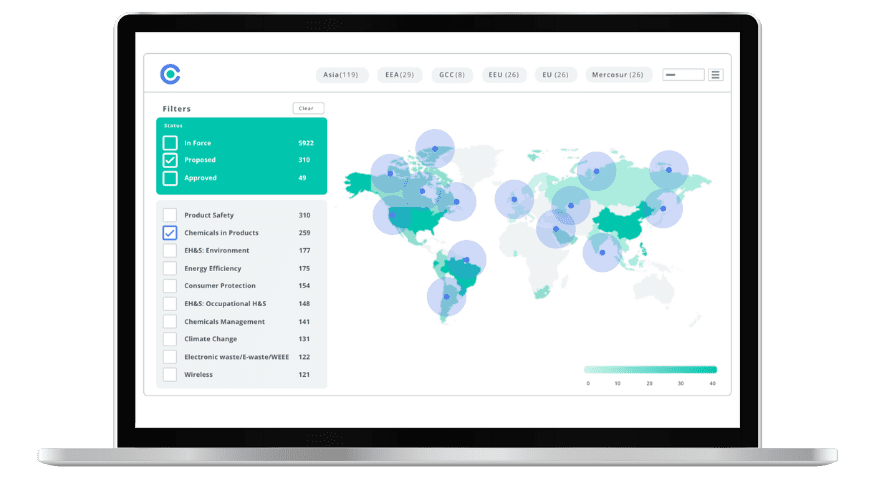
Simplify Corporate Sustainability Compliance
Six months of research, done in 60 seconds. Cut through ESG chaos and act with clarity. Try C&R Sustainability Free.